Turboprops: A Study of the Short Hop
Published · Updated
The turboprop occupies an honest, useful station in private aviation, and any account of it between New York and Miami must begin with candor about distance. The route runs near 950 nautical miles; some turboprops clear it comfortably, others only with margin to spare, and one or two cannot manage it nonstop at all. We set the matter out plainly here rather than leave it to the fine print.
Where the range is adequate, the turboprop rewards the traveler with the lowest operating cost of any class on this route and ready access to the smaller fields around both Teterboro Airport (TEB) and Miami-Opa Locka Executive Airport (OPF). Where it is not, we say so and propose a light jet in its place.
Private charters between New York and Miami typically depart from Teterboro Airport (TEB), Westchester County Airport (HPN), Republic Airport (FRG), or Long Island MacArthur Airport (ISP) and arrive at Miami-Opa Locka Executive Airport (OPF), Fort Lauderdale Executive Airport (FXE), President Donald J. Trump International Airport (DJT), or Miami International Airport (MIA).
The Turboprops — New York to Miami
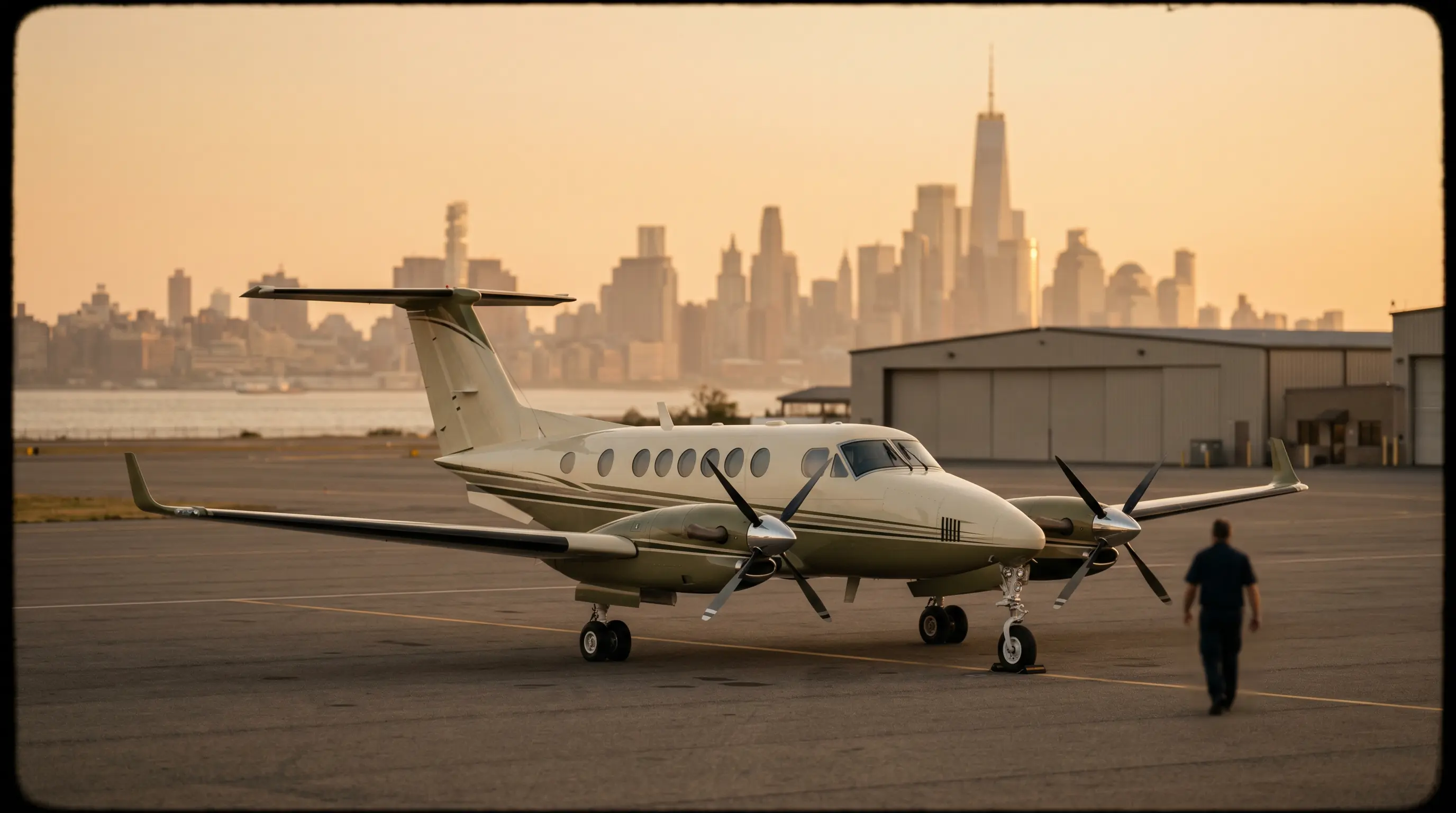 Beechcraft King Air 350i: New York to Miami View details
 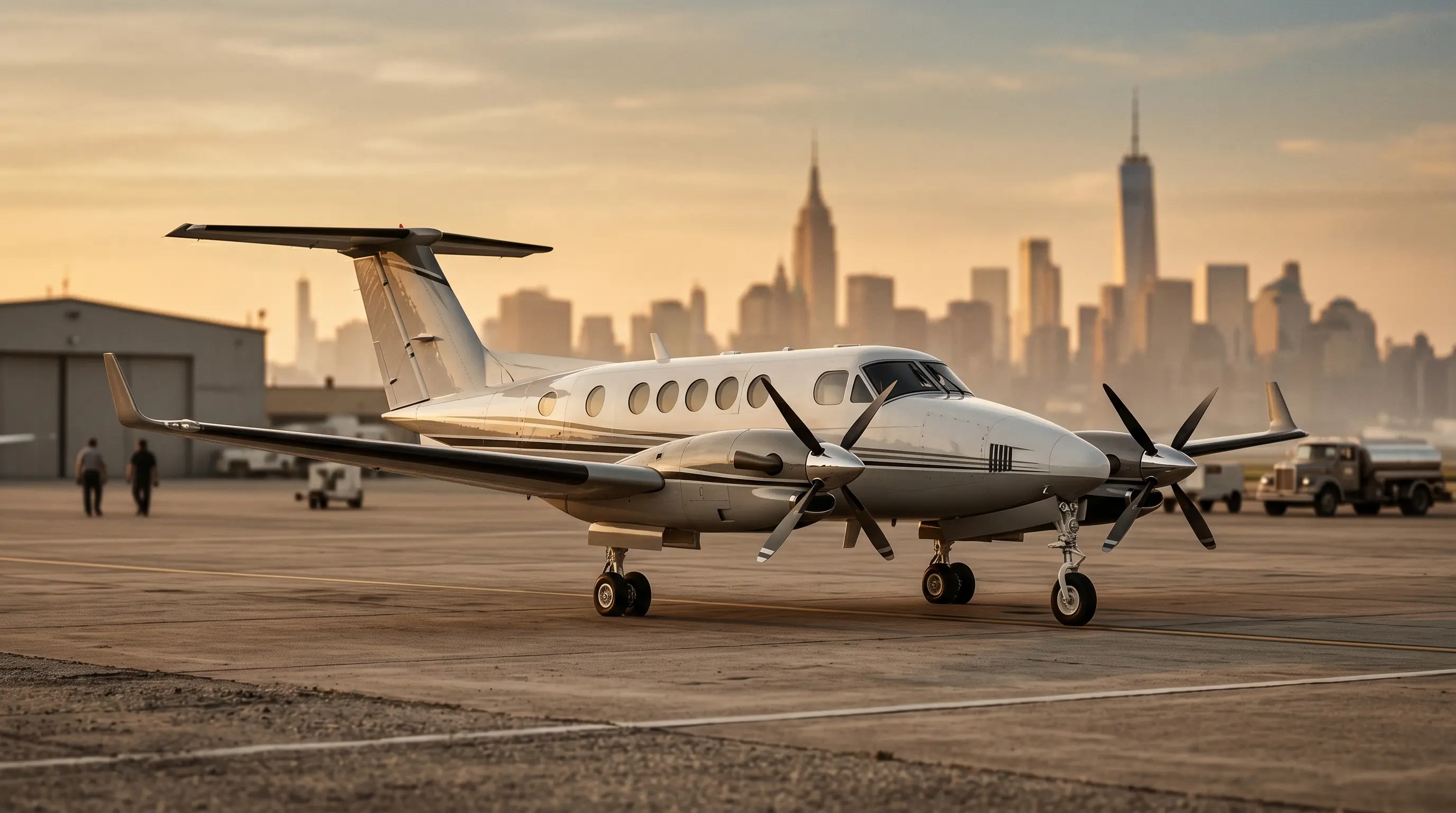 Beechcraft King Air 260: New York to Miami View details
 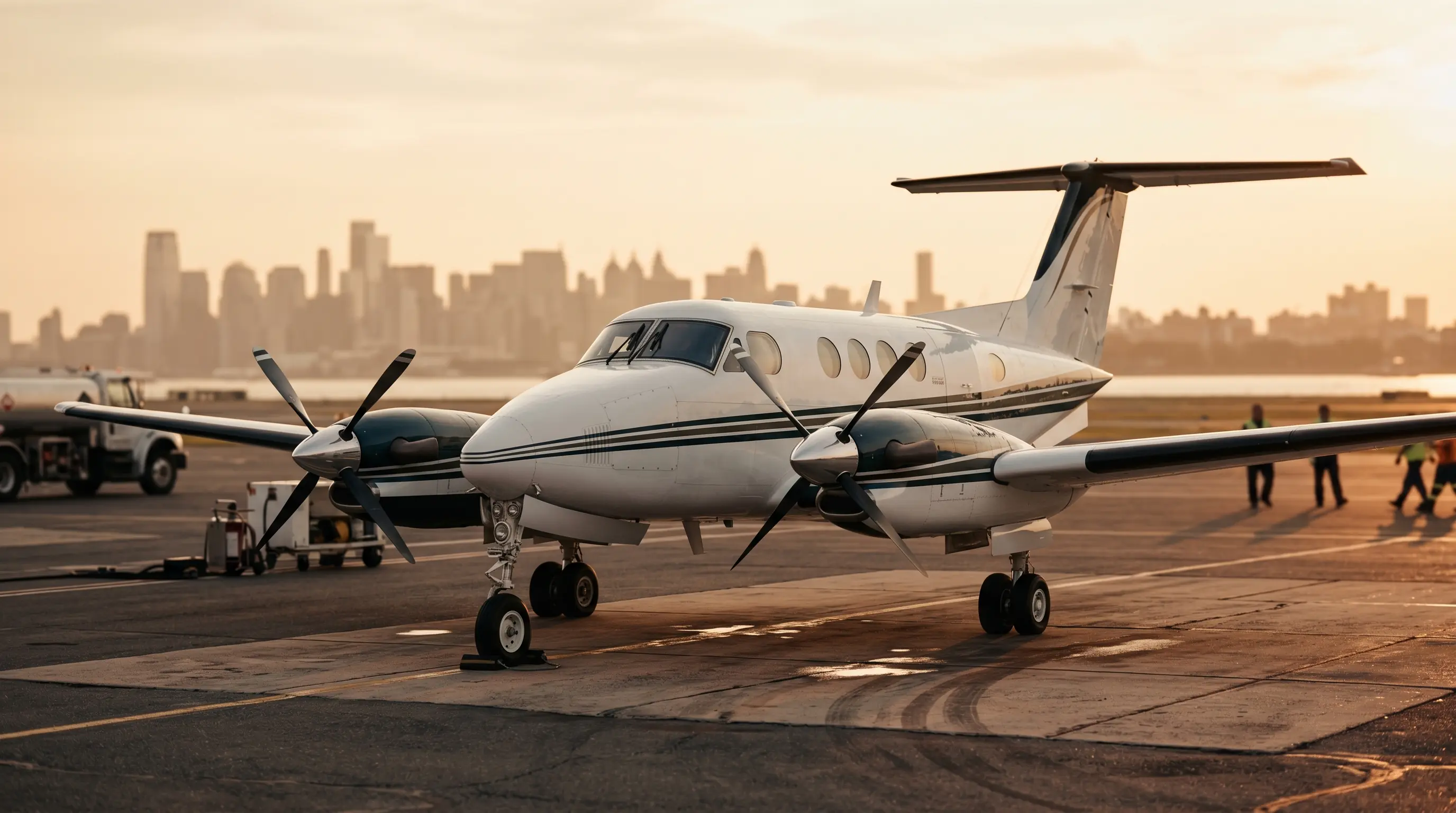 Beechcraft King Air C90GTx: NY to Miami View details
 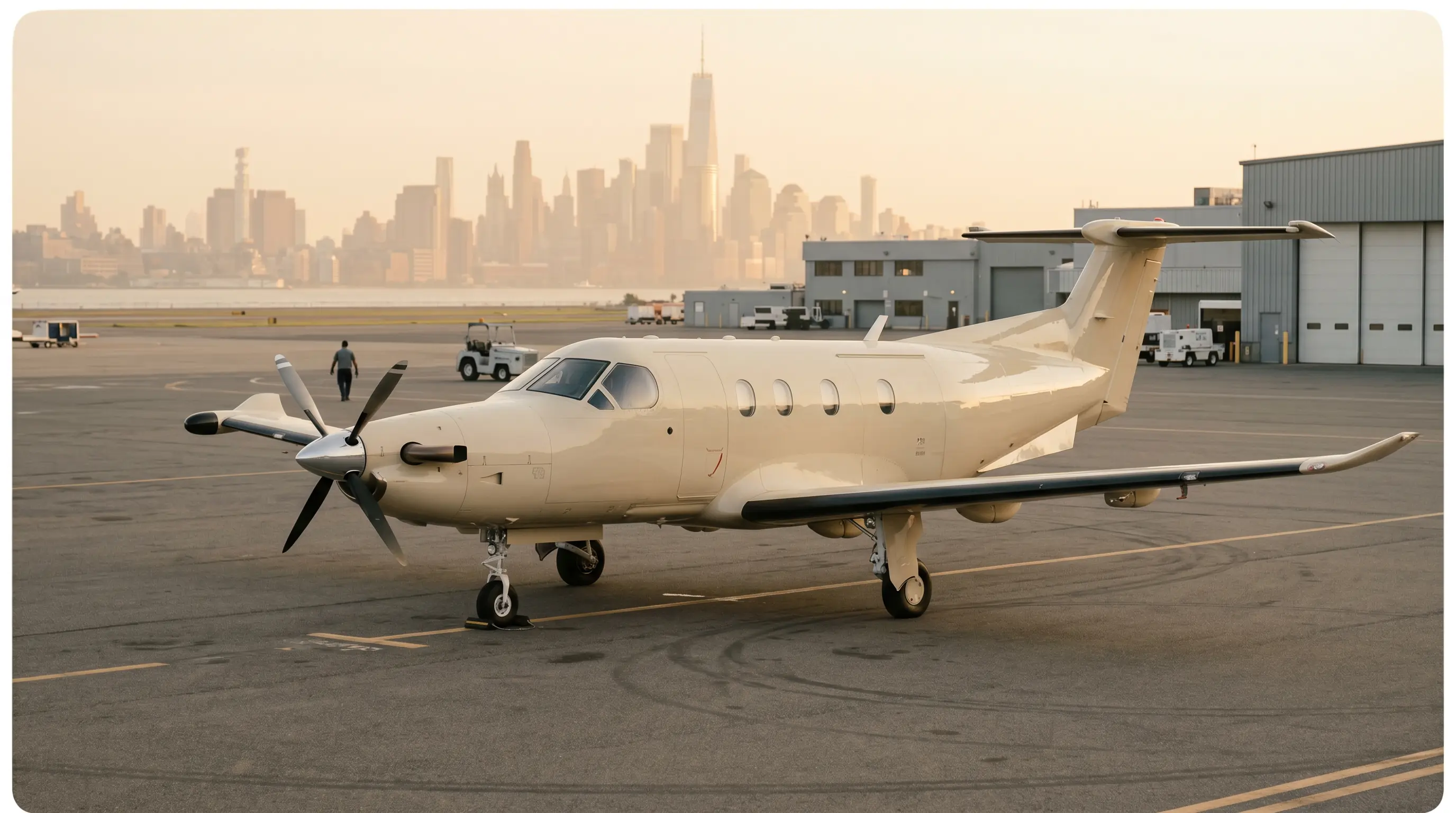 Pilatus PC-12 NGX: New York to Miami View details
 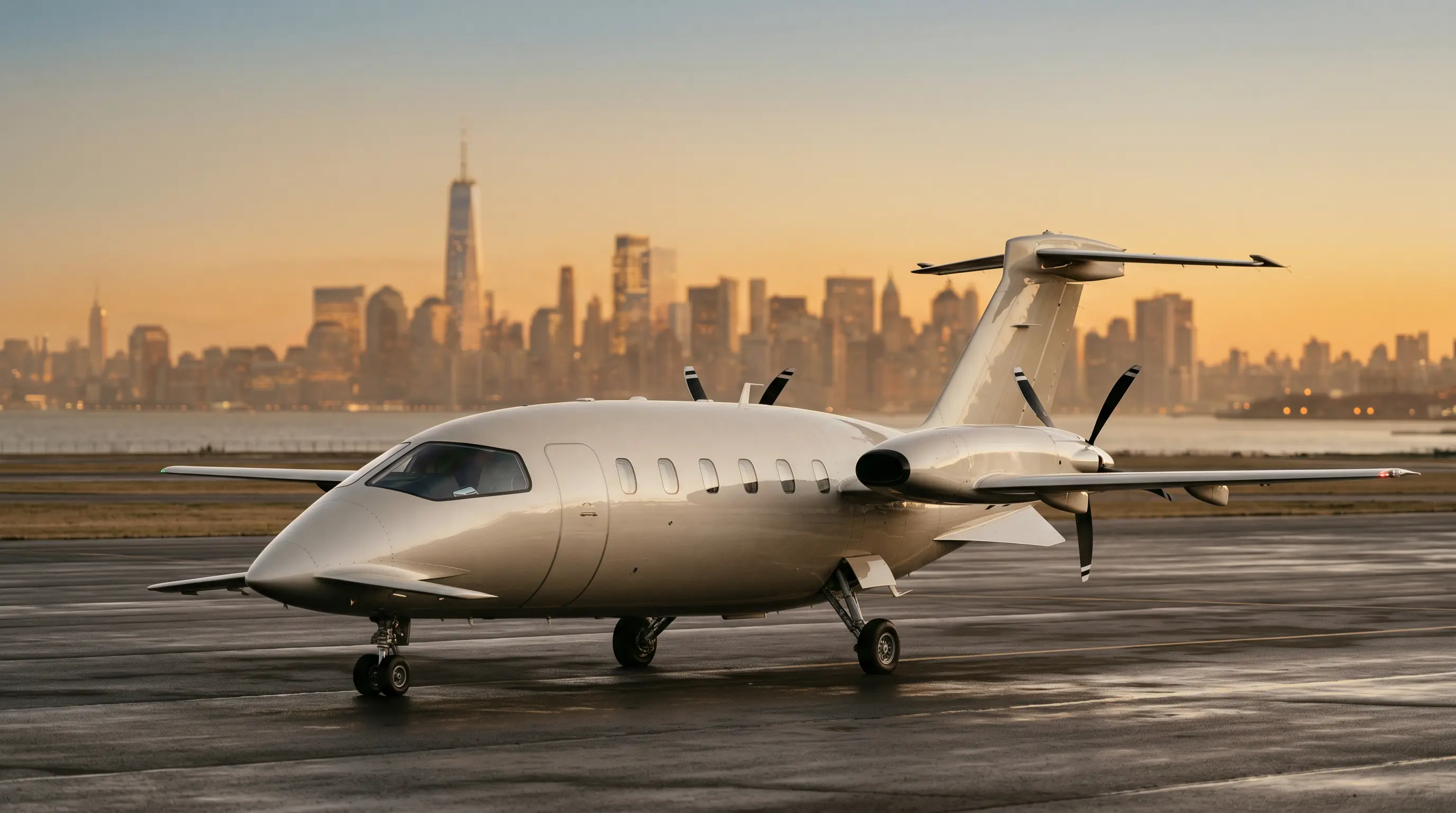 Piaggio Avanti EVO: New York to Miami View details
 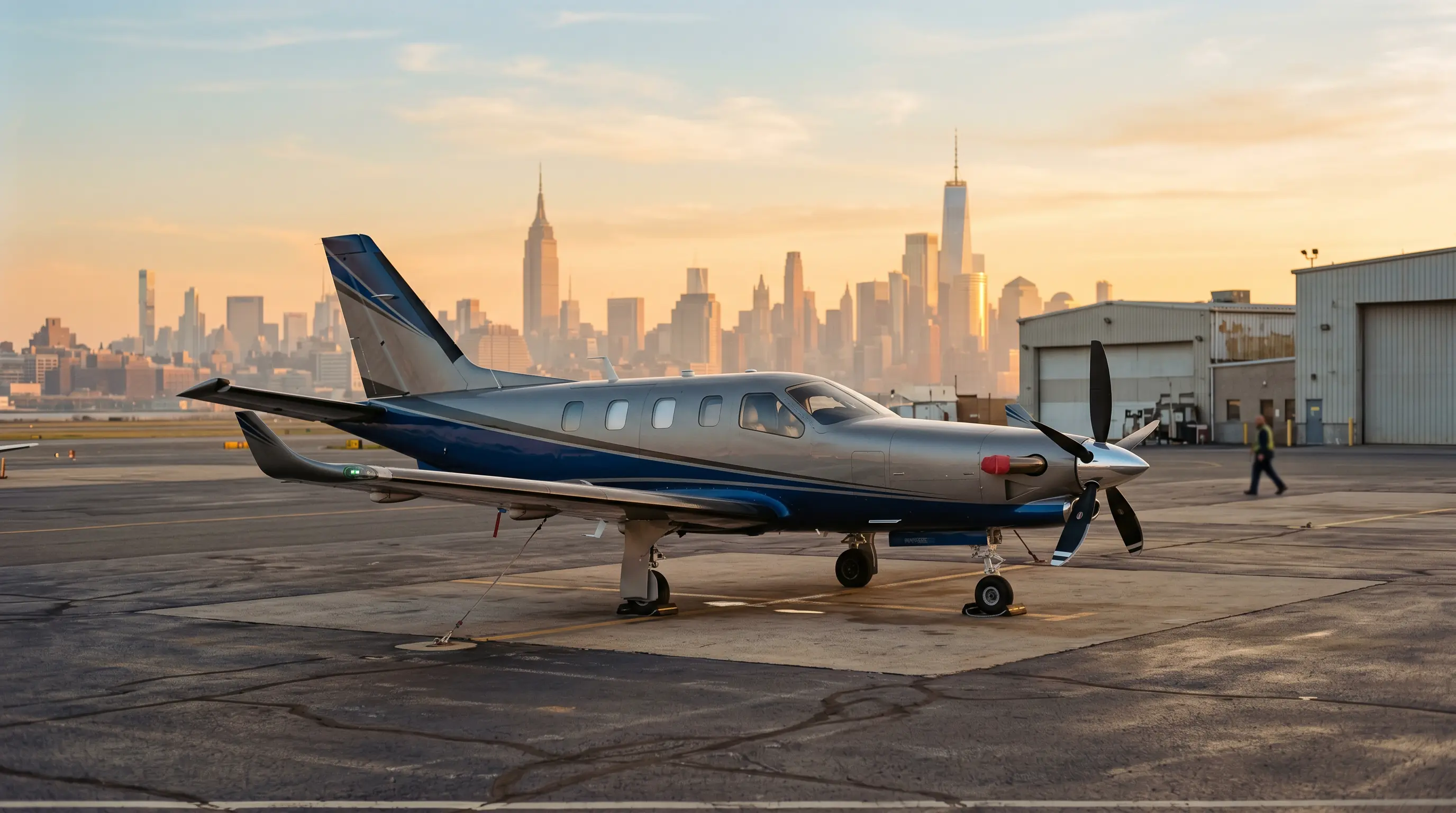 Daher TBM 960: New York to Miami View details
 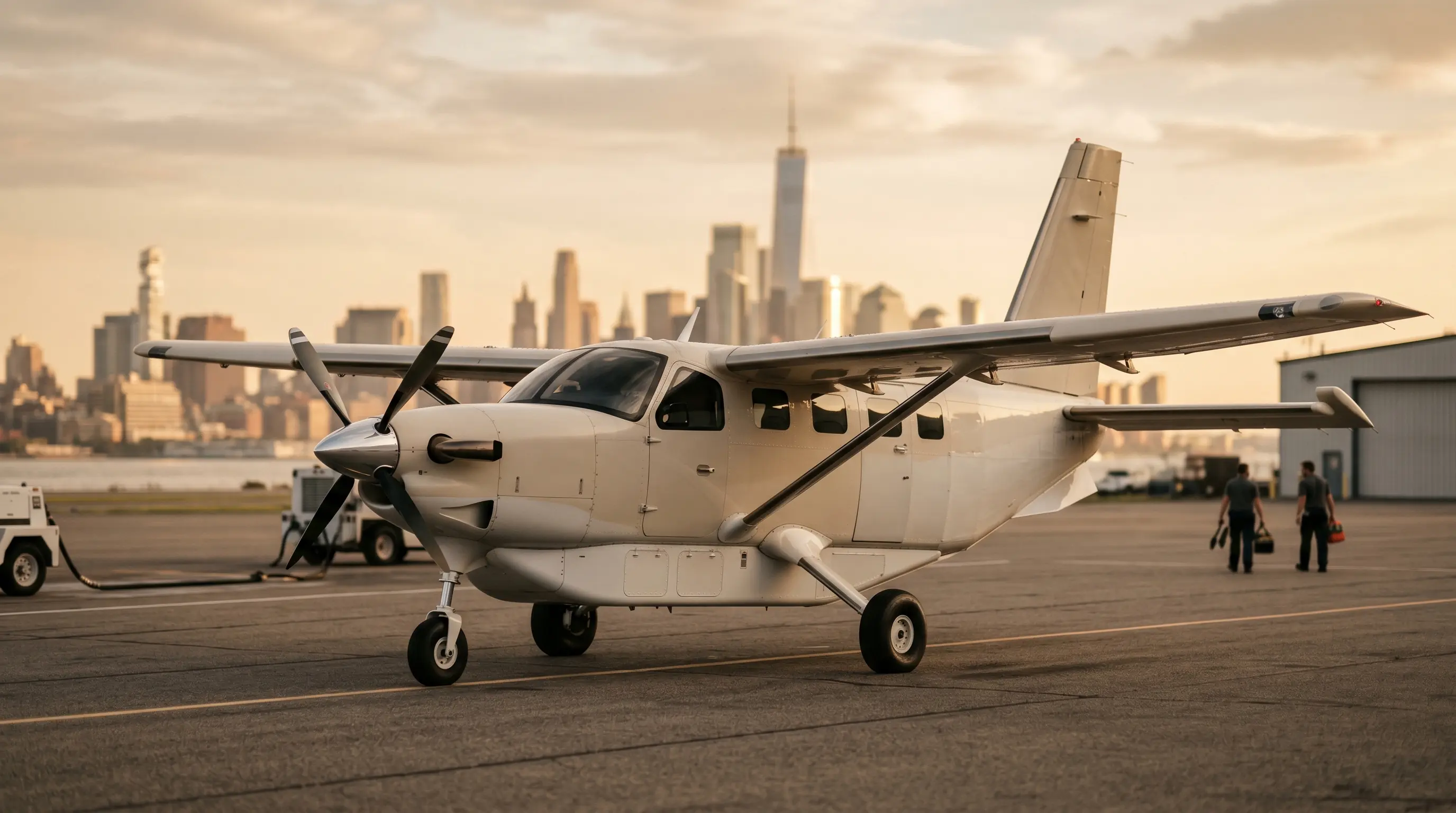 Daher Kodiak 900: New York to Miami View details
 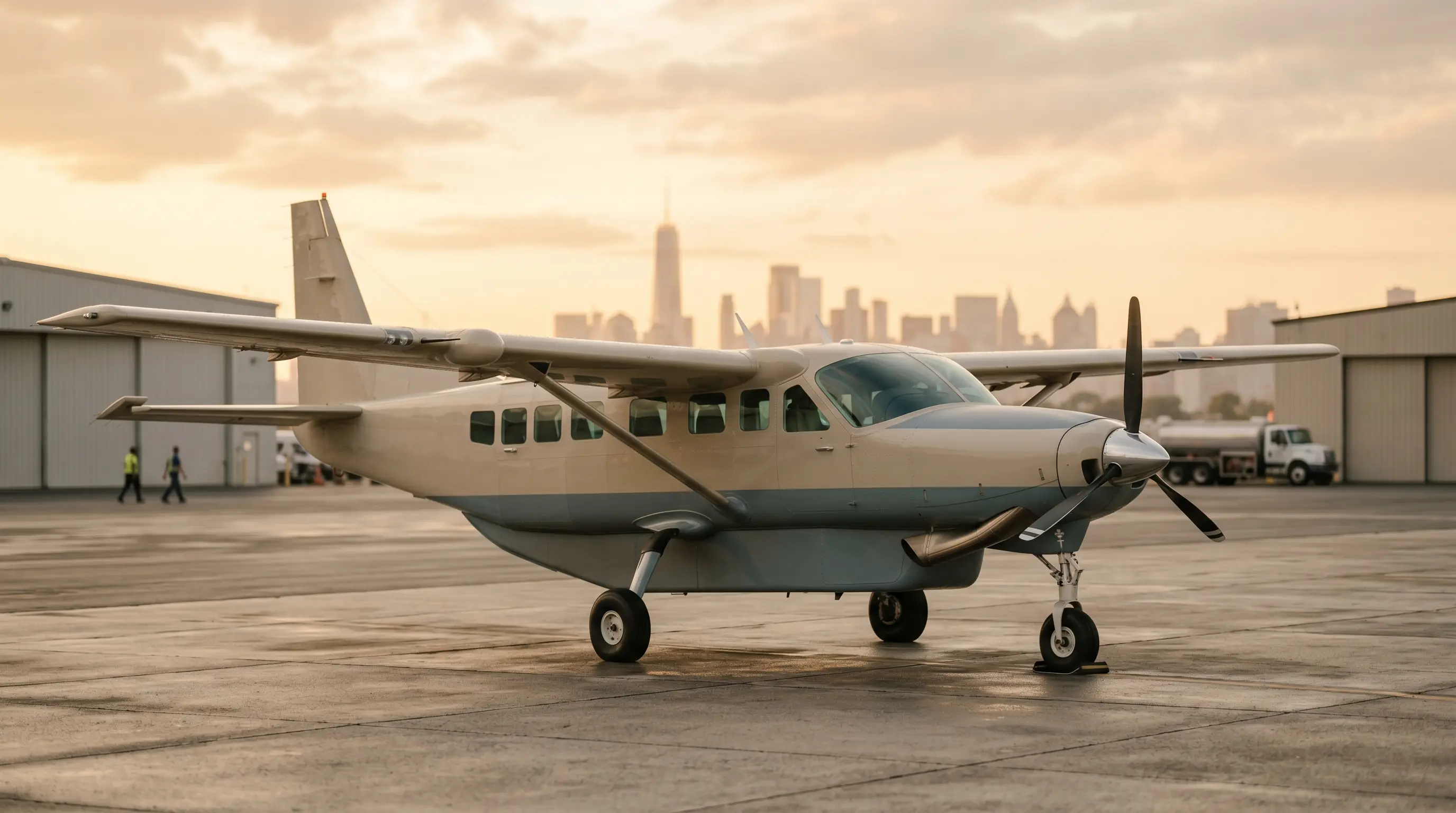 Cessna Grand Caravan EX: New York to Miami View details
 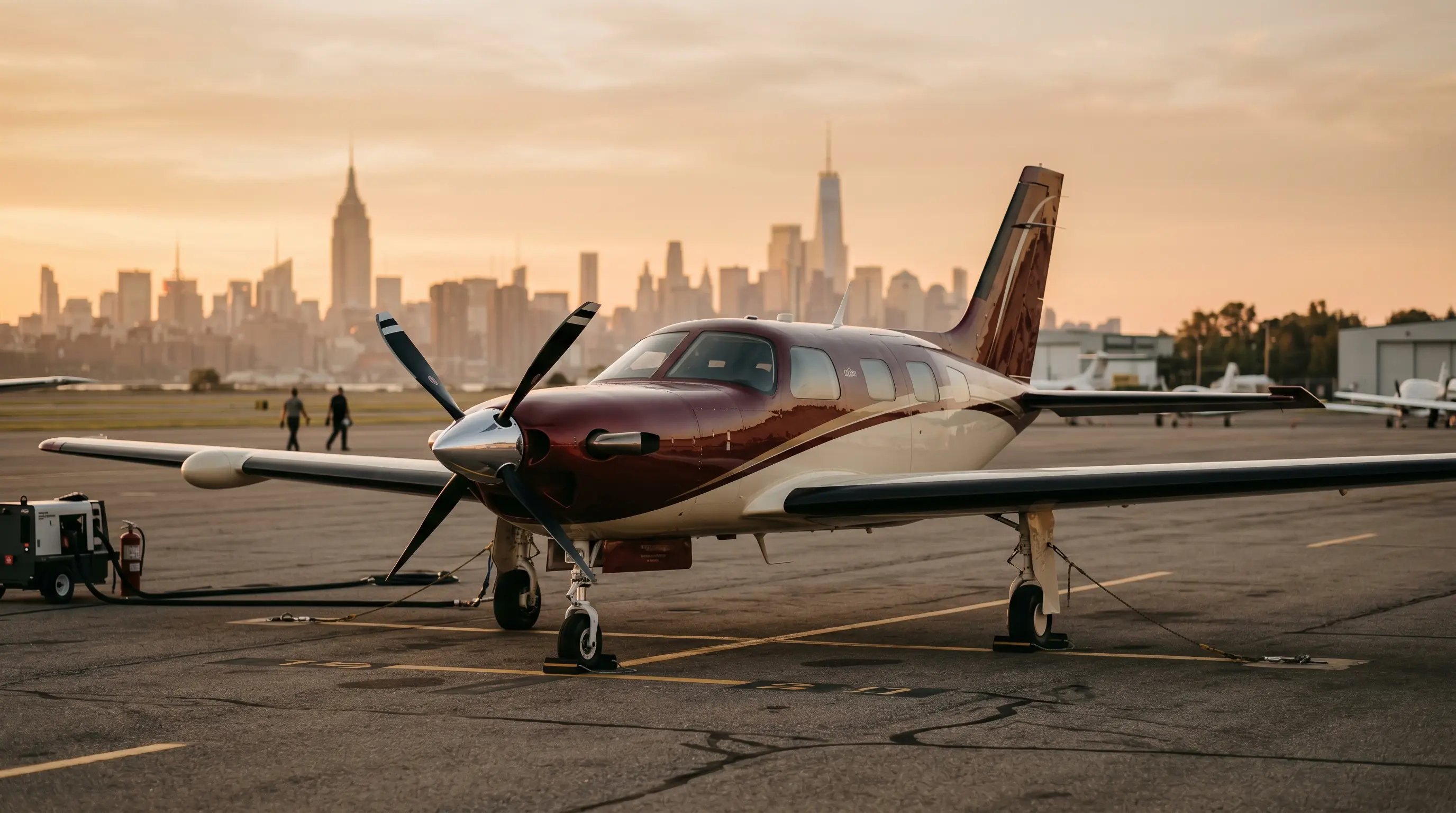 Piper M600/SLS: New York to Miami View details
 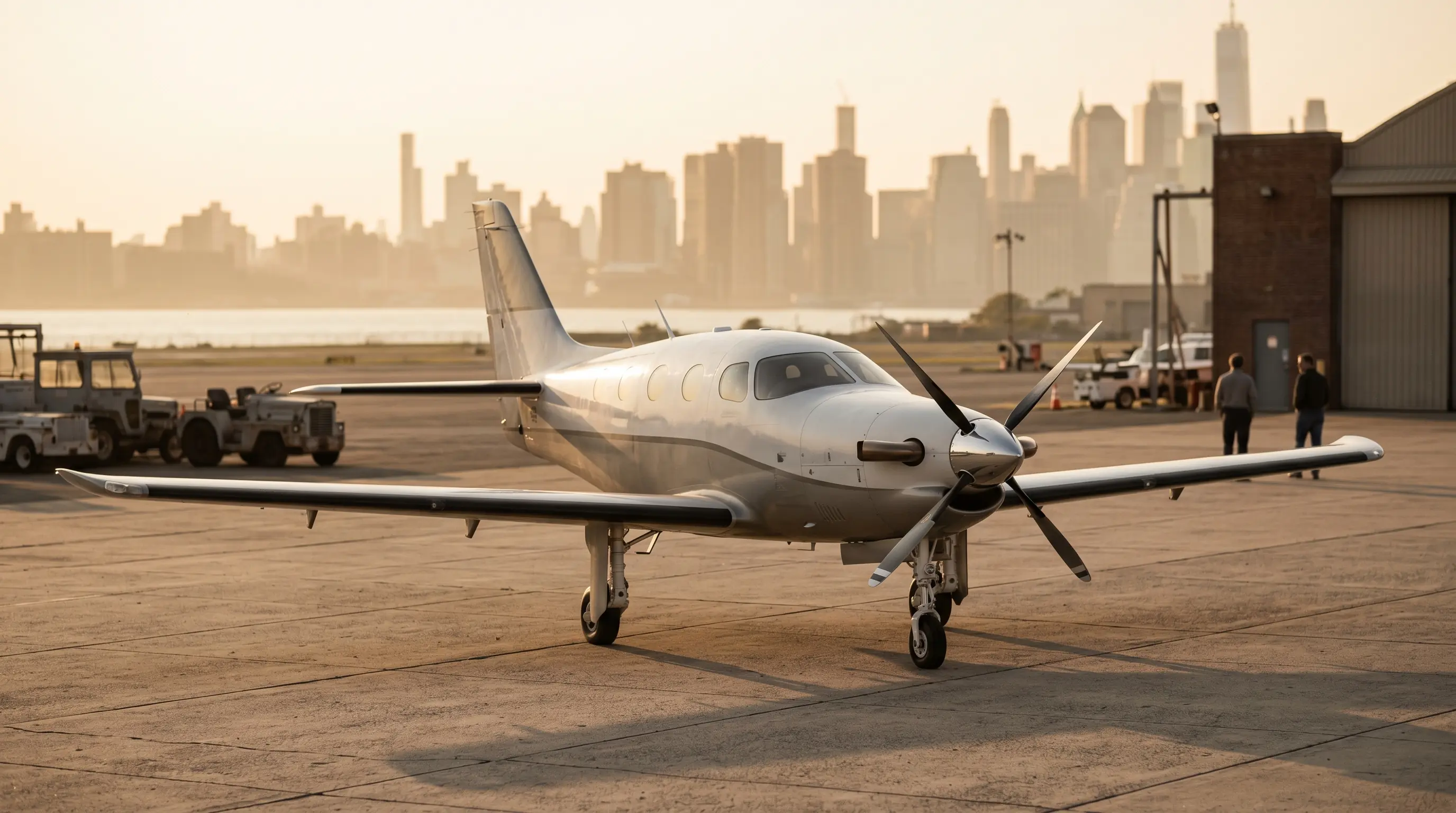 Epic E1000 GX: New York to Miami View details
A Comparison at a Glance
| Aircraft | Passengers | Range | Cruise | From (one-way) |
|---|---|---|---|---|
| King Air 350 | 8 | 1,806 nm | 312 ktas | $9,000 |
| King Air 260 | 6–8 | 1,720 nm | 310 ktas | $9,000 |
| King Air C90GTx | 5–6 | 1,260 nm | 272 ktas | $8,000 |
| Pilatus PC-12 | 6–8 | 1,765 nm | 290 ktas | $8,500 |
| Avanti EVO | 6–7 | 1,510 nm | 402 ktas | $9,500 |
| TBM 960 | 4 | 1,730 nm | 330 ktas | $7,500 |
| Kodiak 900 | 6 | 1,129 nm | 210 ktas | $6,500 |
| Grand Caravan EX | 9–10 | 912 nm | 185 ktas | $5,500 |
| M600/SLS | 4–5 | 1,658 nm | 274 ktas | $6,500 |
| E1000 GX | 4–5 | 1,560 nm | 333 ktas | $7,000 |
The merits, stated without exaggeration
A turboprop trades the jet's cruise speed for a markedly lower hourly cost and a shorter runway requirement, which opens fields a jet would decline. For a short regional sector with a small party, the economics are difficult to better; the cabins of the larger King Airs and the Pilatus PC-12 are genuinely comfortable, and the class earns its place for the right trip.
- The lowest hourly cost of any class on the route
- Runway flexibility and access to the smallest airports
- Comfortable cabins on the larger twins and the PC-12
- A sound choice for the small party on a regional leg

A candid word on range over ~950 nm
Several turboprops listed here clear the 950 miles with ease — the King Air 350i, the Pilatus PC-12, and the Piper M600 among them. The Kodiak 900 and King Air C90GTx manage it but with less reserve. The Grand Caravan EX, by contrast, has a published range below the route distance and is not a nonstop proposition; we recommend it only for shorter sectors, and would arrange a jet for the full run.
When a jet is the wiser instrument
If the priority is the shortest possible block time, or if range margin against a winter headwind matters, a light jet is the more rational selection on this route and seldom costs disproportionately more. We are content to quote a turboprop and a light jet together and let the figures, and the candor above, decide.
Turboprops — A Visual Chronicle
Frequently Asked Questions
- Most can. The King Air 350i, Pilatus PC-12, and Piper M600 clear the ~950-nautical-mile leg with reserves; the Kodiak 900 and King Air C90GTx manage it with less margin. The Grand Caravan EX cannot do so nonstop and is better suited to shorter sectors.
- Chiefly cost. A turboprop carries the lowest hourly rate of any class on this route and reaches the smallest fields. The trade-off is cruise speed: a jet completes the journey more quickly, which is why we quote both and let the particulars decide.
- Plan on roughly three and a quarter to four and a half hours depending on the aircraft, the faster pressurized types such as the Avanti EVO sitting at the shorter end of that range and the slower singles at the longer.
- Between four and nine, by model. The larger twins such as the King Air 350i seat eight in comfort; the single-engine cabins are better proportioned to four or five for a flight of this length.
- A one-way turboprop charter from New York to Miami generally falls between roughly $5,500 and $14,500 (estimated), depending on the aircraft and the date. Every quote includes fuel, fees, and taxes in the stated price.
Ready to fly New York to Miami?
Send your dates and party size for estimated pricing across suitable aircraft — typically within two hours, with no obligation.
 +1 (332) 290-1479
