Daher Kodiak 900: New York to Miami
Published · Updated
The Daher Kodiak 900 is a rugged, high-capacity single-engine turboprop that improves upon the breed with greater range and a quieter, more refined cabin. On the run down to Miami it flies the route nonstop — if with a modest margin — and brings real utility to groups that want capacity, generous luggage, and an economical charter cost.
From Teterboro Airport (TEB) to Miami-Opa Locka Executive Airport (OPF) it completes the route, a capable workhorse with room for the party and its luggage.
- 1,129 nm range
- 210 ktas cruise
- 6 passengers
Estimated pricing for planning — your account manager confirms the final quote.
Private charters between New York and Miami typically depart from Teterboro Airport (TEB), Westchester County Airport (HPN), Republic Airport (FRG), or Long Island MacArthur Airport (ISP) and arrive at Miami-Opa Locka Executive Airport (OPF), Fort Lauderdale Executive Airport (FXE), President Donald J. Trump International Airport (DJT), or Miami International Airport (MIA).
Kodiak 900 Specifications
Manufacturer performance figures — Daher.
- 1,129 nm
- Max range
- 210 ktas
- Cruise speed
- 6
- Passengers
- 4 ft 9 in
- Cabin height
- 309 cu ft
- Luggage
- 25,000 ft
- Service ceiling
The Kodiak 900 on the New York–Miami leg
With 1,129 nautical miles of range against the route's 950, the Kodiak 900 flies New York to Miami nonstop with a full cabin and reserves, though its margin over the distance is modest and we will confirm performance against the day's winds. Its 210-knot cruise makes for a flight of around four and a quarter hours — slow by the standards of the class, the trade-off for its capacity and economy.
The 900 brought a stretched cabin, more power, and a notably quieter interior to the rugged Kodiak line, and a 25,000-foot ceiling that, while modest, suffices for this route.
- Range of 1,129 nm — nonstop over the 950 miles with reserves
- High capacity and a cavernous luggage hold
- A quieter, more refined cabin than its forebears
- A rugged, economical utility turboprop

The cabin and its capacity
The cabin seats six against a maximum of ten, with an extraordinary three hundred and nine cubic feet of luggage — by a wide margin the most in the catalog. It is a practical, capable space rather than a luxurious one, well suited to groups traveling with substantial luggage or equipment who value capacity above all.
How it compares within the class
The Kodiak 900 is the nonstop alternative to the shorter-legged Grand Caravan EX on the New York–Miami route, and a more utilitarian counterpart to the refined Pilatus PC-12. For the group that needs capacity and luggage at an economical charter cost, it is among the most practical members of the turboprop class.
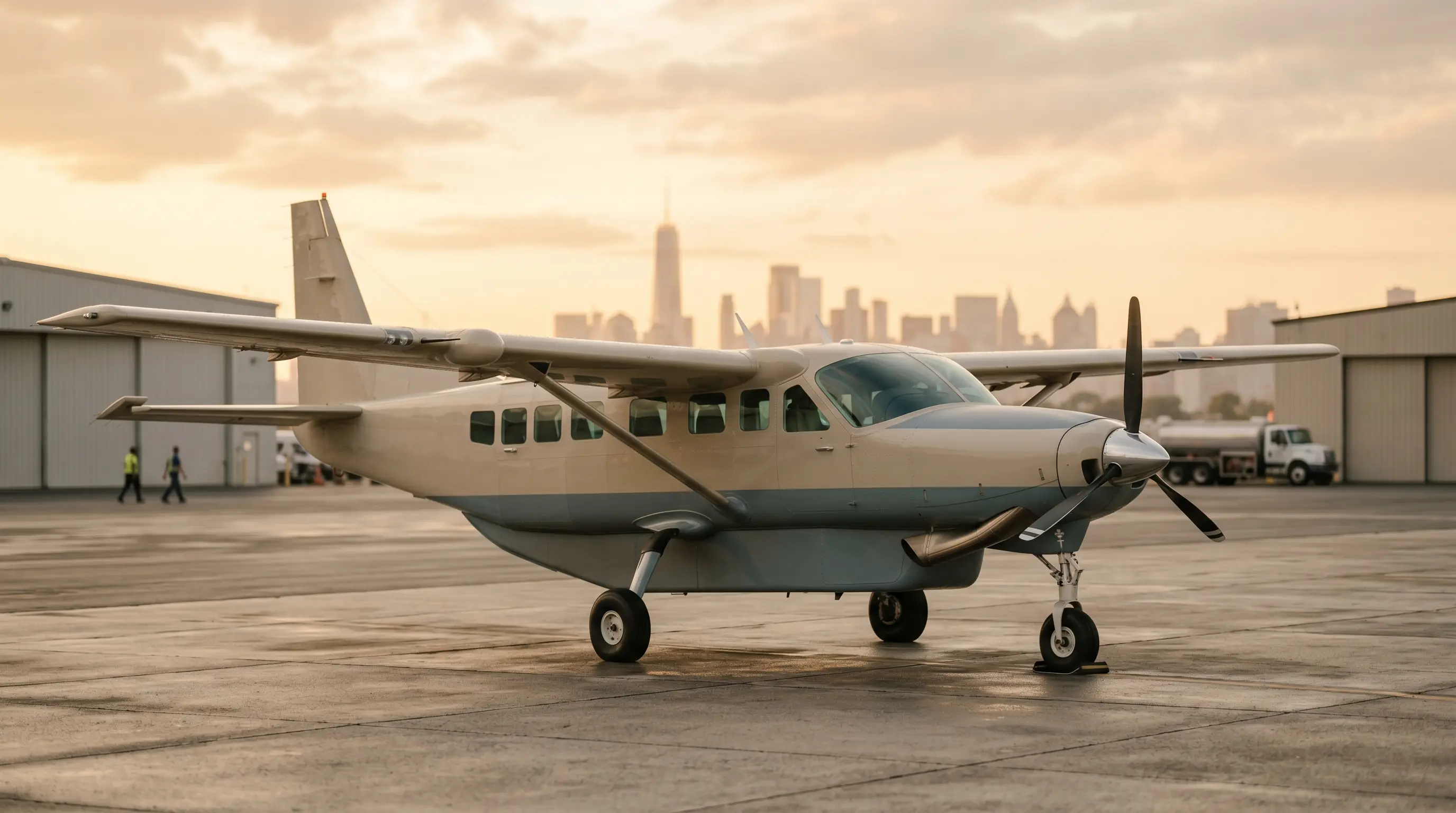
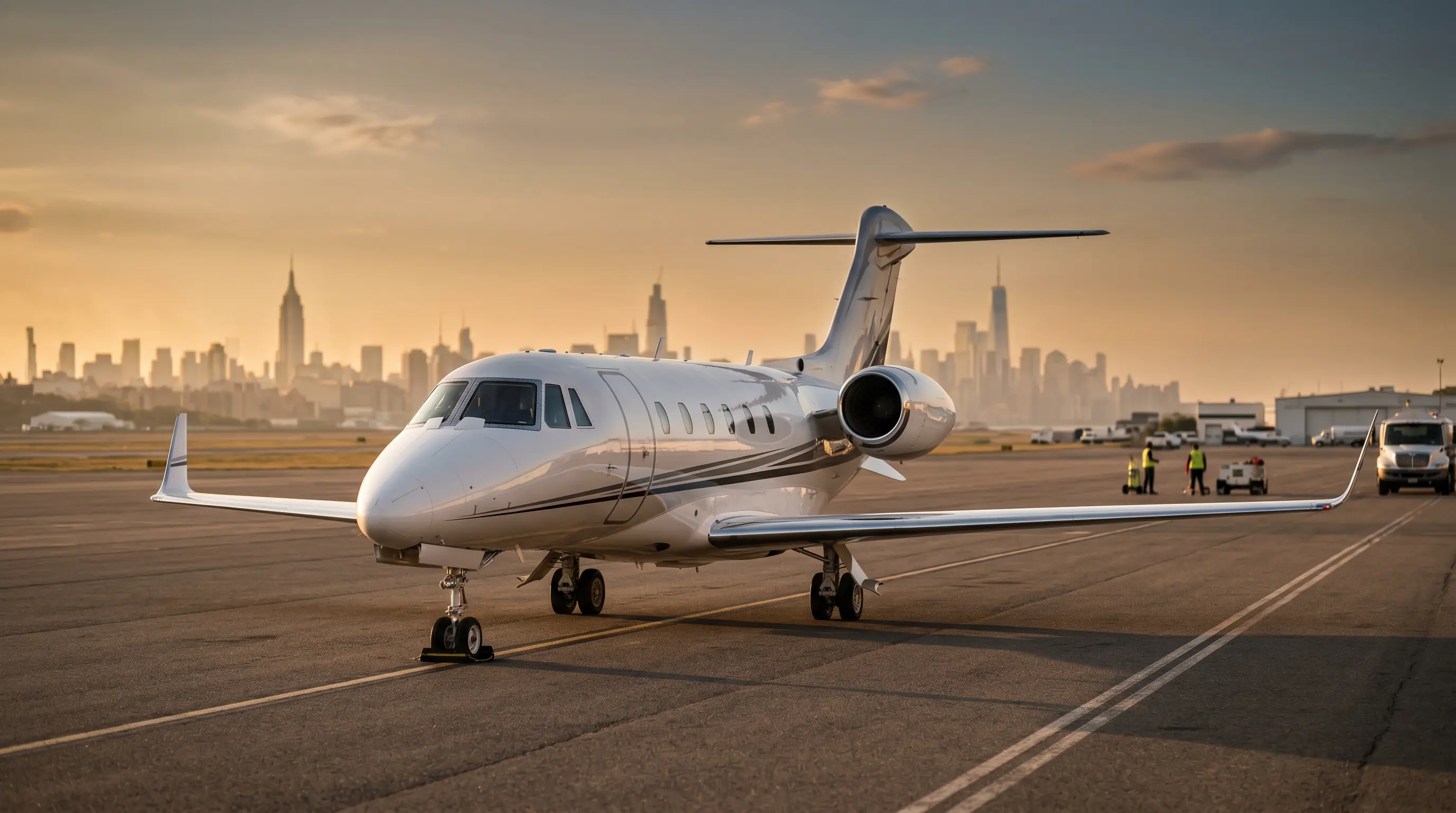
The Kodiak 900, inside and out
Other Turboprops for the TEB–OPF Route
Charter services for the New York–Miami route

Frequently Asked Questions
- It does, though with a modest margin. Its 1,129-nautical-mile range against the 950 miles from New York permits a nonstop flight with a full cabin and reserves; we will confirm performance against the day's winds.
- The Kodiak 900 has greater range — enough to fly the whole way nonstop, where the Caravan cannot — and a quieter, more refined cabin. Both are rugged, high-capacity utility turboprops; the 900 is the better choice for the full Miami run.
- An extraordinary three hundred and nine cubic feet — by a wide margin the most of any aircraft in the catalog. It is exceptionally well suited to groups traveling with substantial luggage or equipment.
- Around four and a quarter hours nonstop to Miami at its 210-knot cruise — slow by the standards of the class, the trade-off for its capacity and economy.
- A one-way Kodiak 900 charter from New York to Miami runs roughly $6,500 to $9,500 (estimated), depending on the date and availability. Every quote includes fuel, fees, and taxes in the stated price.
Ready to fly New York to Miami?
Send your dates and party size for estimated pricing across suitable aircraft — typically within two hours, with no obligation.
 +1 (332) 290-1479
