Light Jets: The New York–Miami Route
Published · Updated
If one class of aircraft can be said to define the flight between New York and Miami, it is the light jet. The route measures roughly 950 nautical miles — a modest distance in private-aviation terms — and the light jet was engineered almost precisely for journeys of this order: far enough to reward a jet, short enough that a larger cabin earns its keep only on the margins.
From Teterboro Airport (TEB) to Miami-Opa Locka Executive Airport (OPF), the typical light jet completes the route in two and three-quarter to three hours, with the fifteen-minute terminal formalities that the executive airports permit in place of the lines at the commercial fields.
Private charters between New York and Miami typically depart from Teterboro Airport (TEB), Westchester County Airport (HPN), Republic Airport (FRG), or Long Island MacArthur Airport (ISP) and arrive at Miami-Opa Locka Executive Airport (OPF), Fort Lauderdale Executive Airport (FXE), President Donald J. Trump International Airport (DJT), or Miami International Airport (MIA).
The Light Jets — New York to Miami
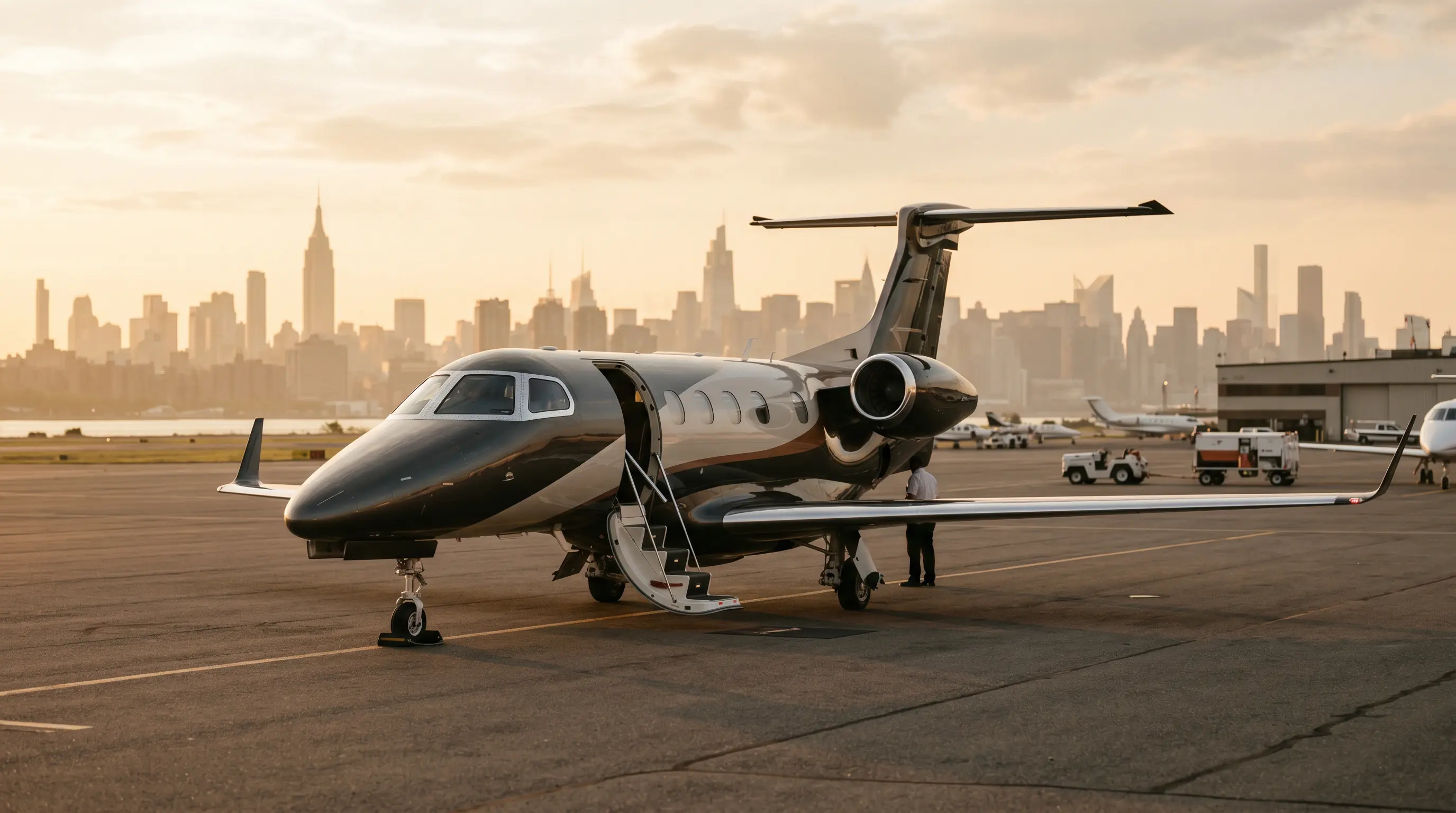 Embraer Phenom 300E: New York to Miami View details
 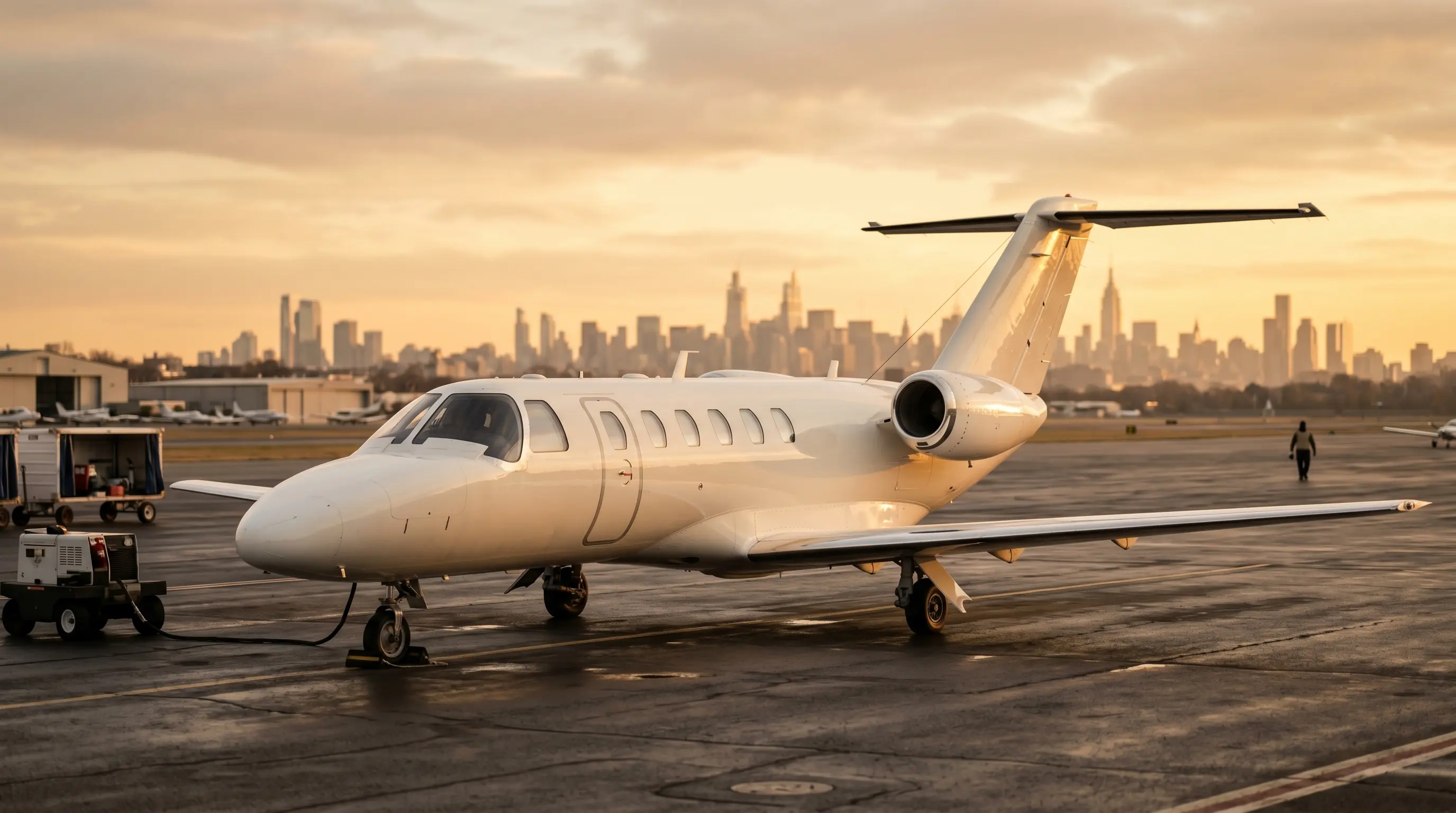 Cessna Citation CJ3+: New York to Miami View details
 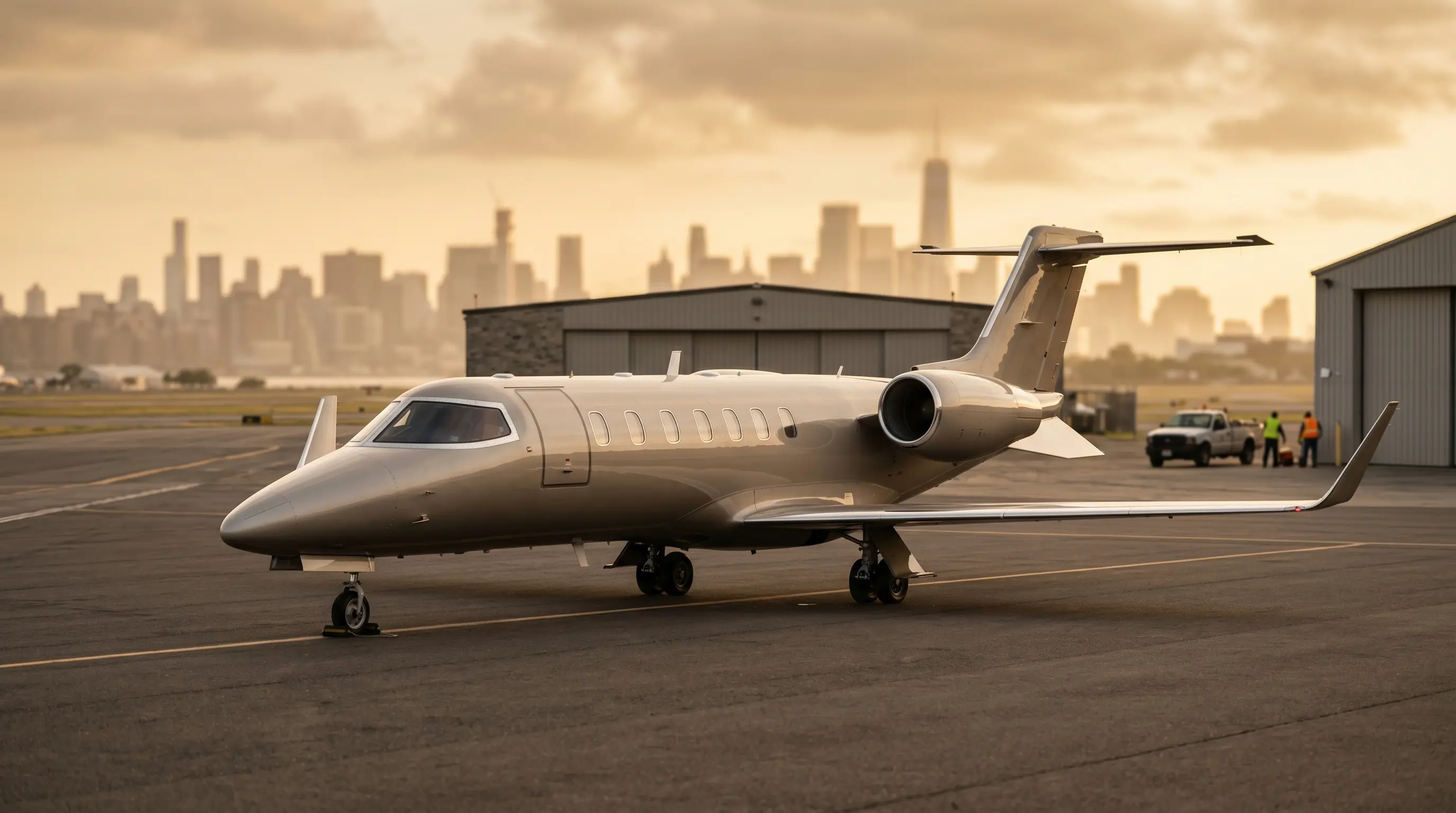 Bombardier Learjet 75: New York to Miami View details
 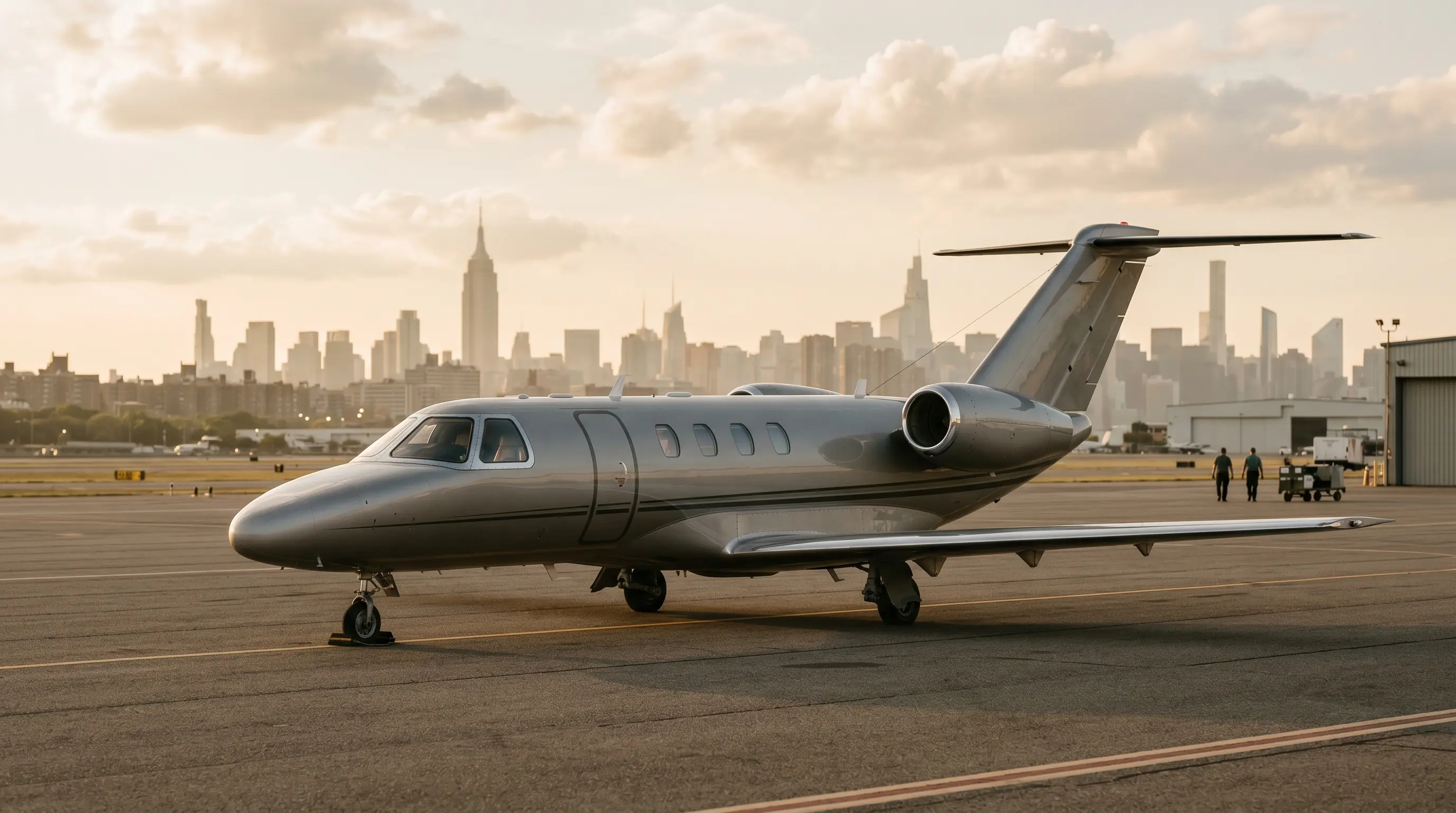 Cessna Citation CJ4 Gen2: New York to Miami View details
 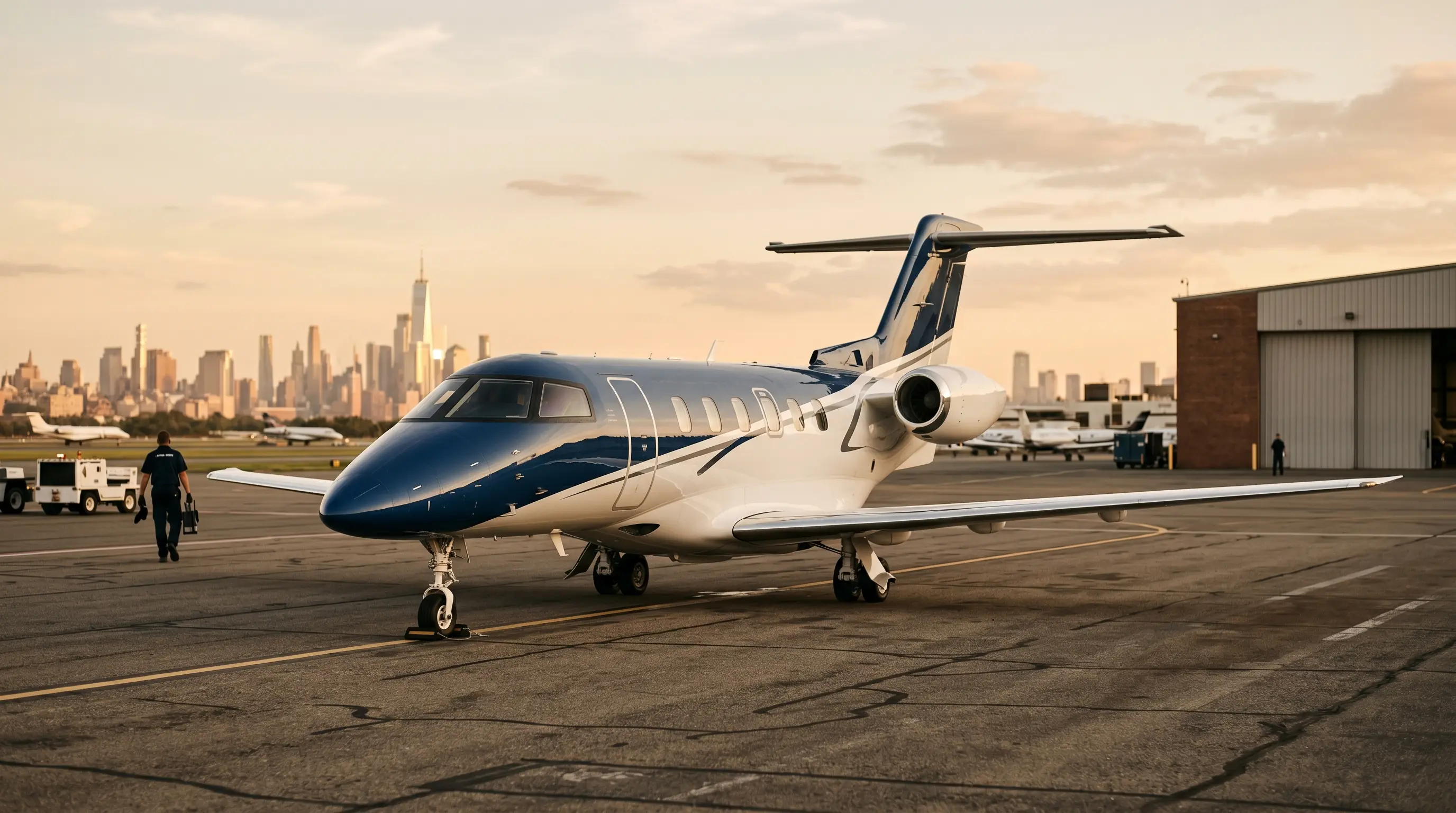 Pilatus PC-24: New York to Miami View details
 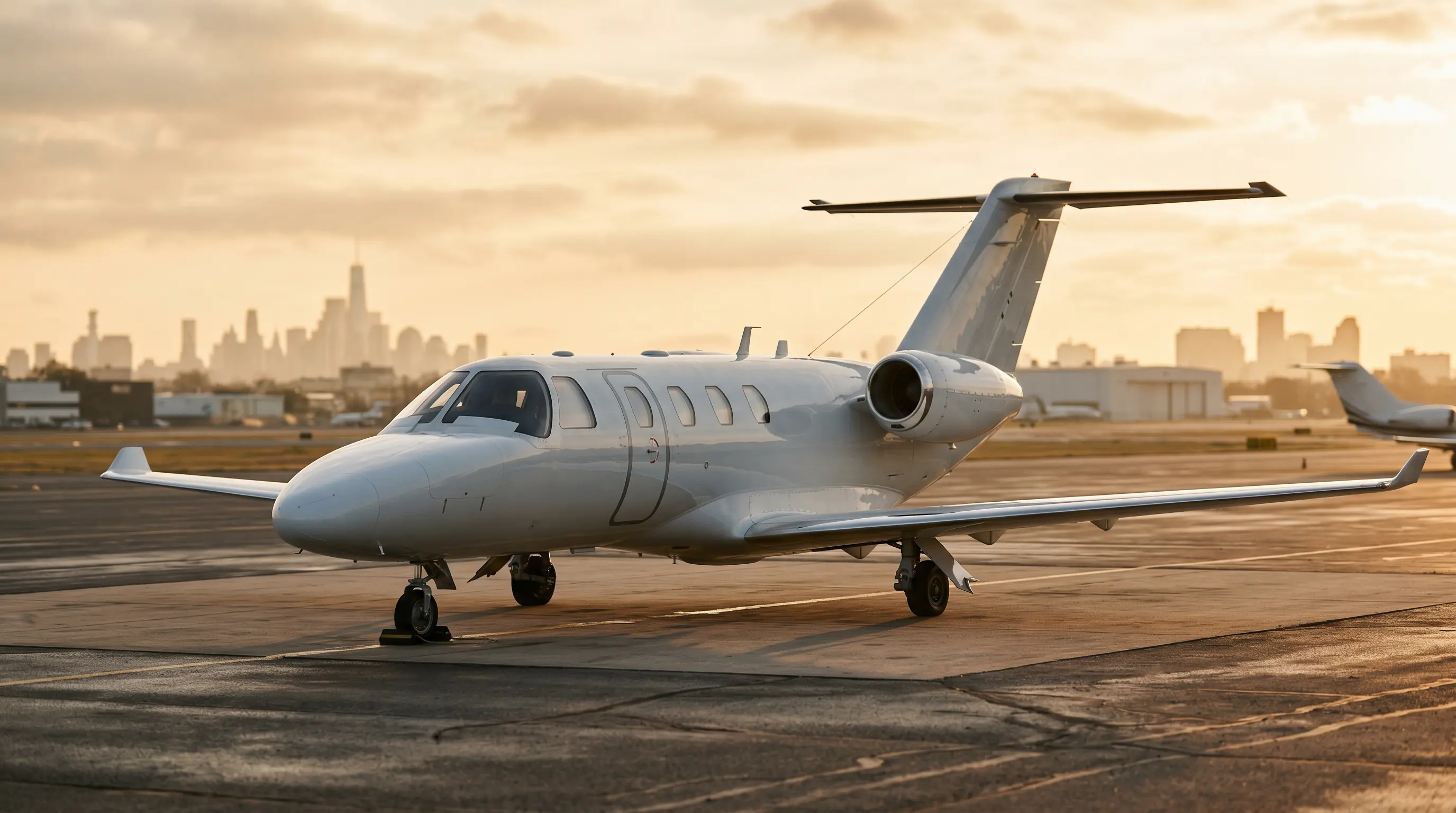 Cessna Citation M2 Gen2: New York to Miami View details
 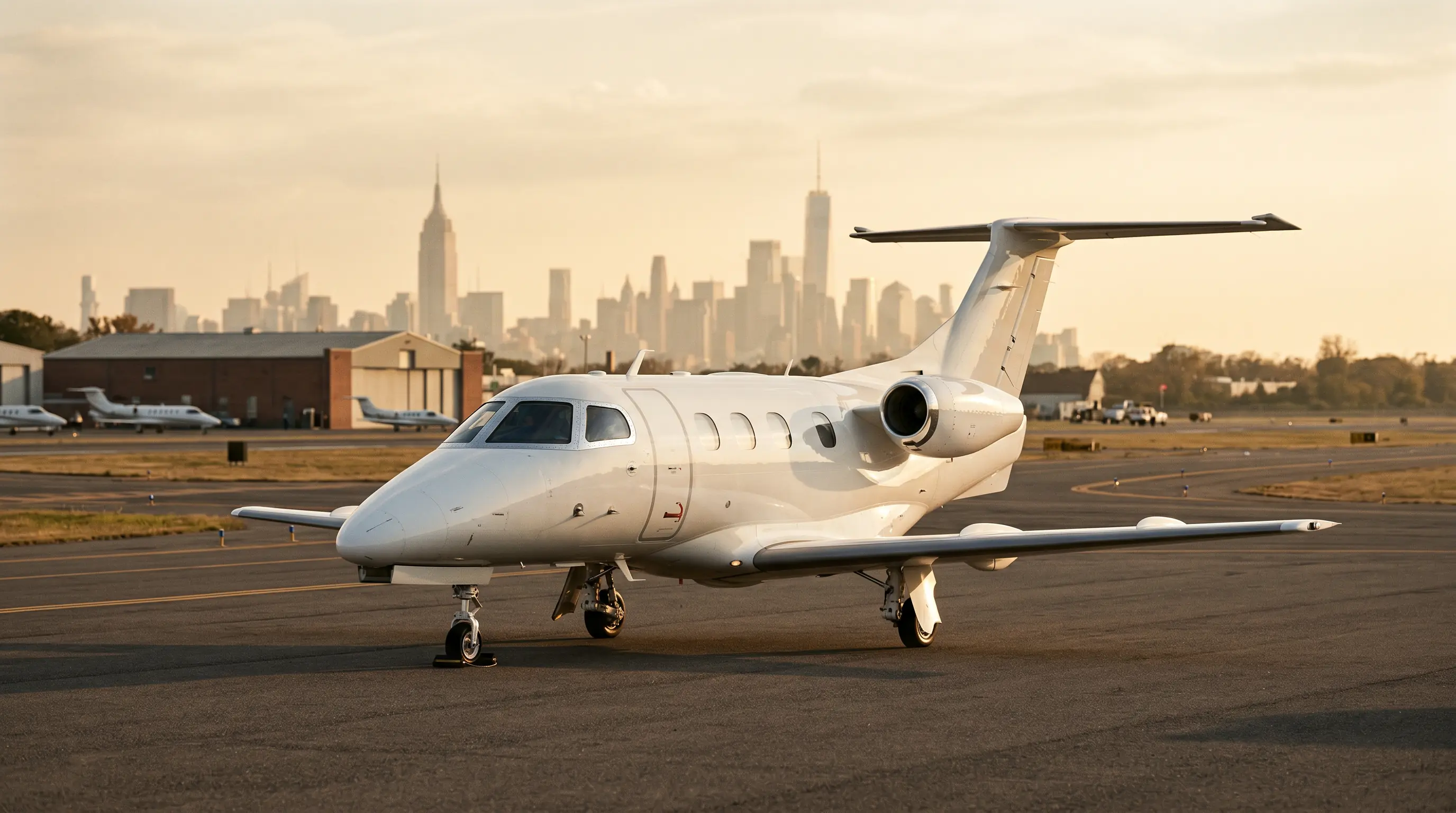 Embraer Phenom 100EV: New York to Miami View details
 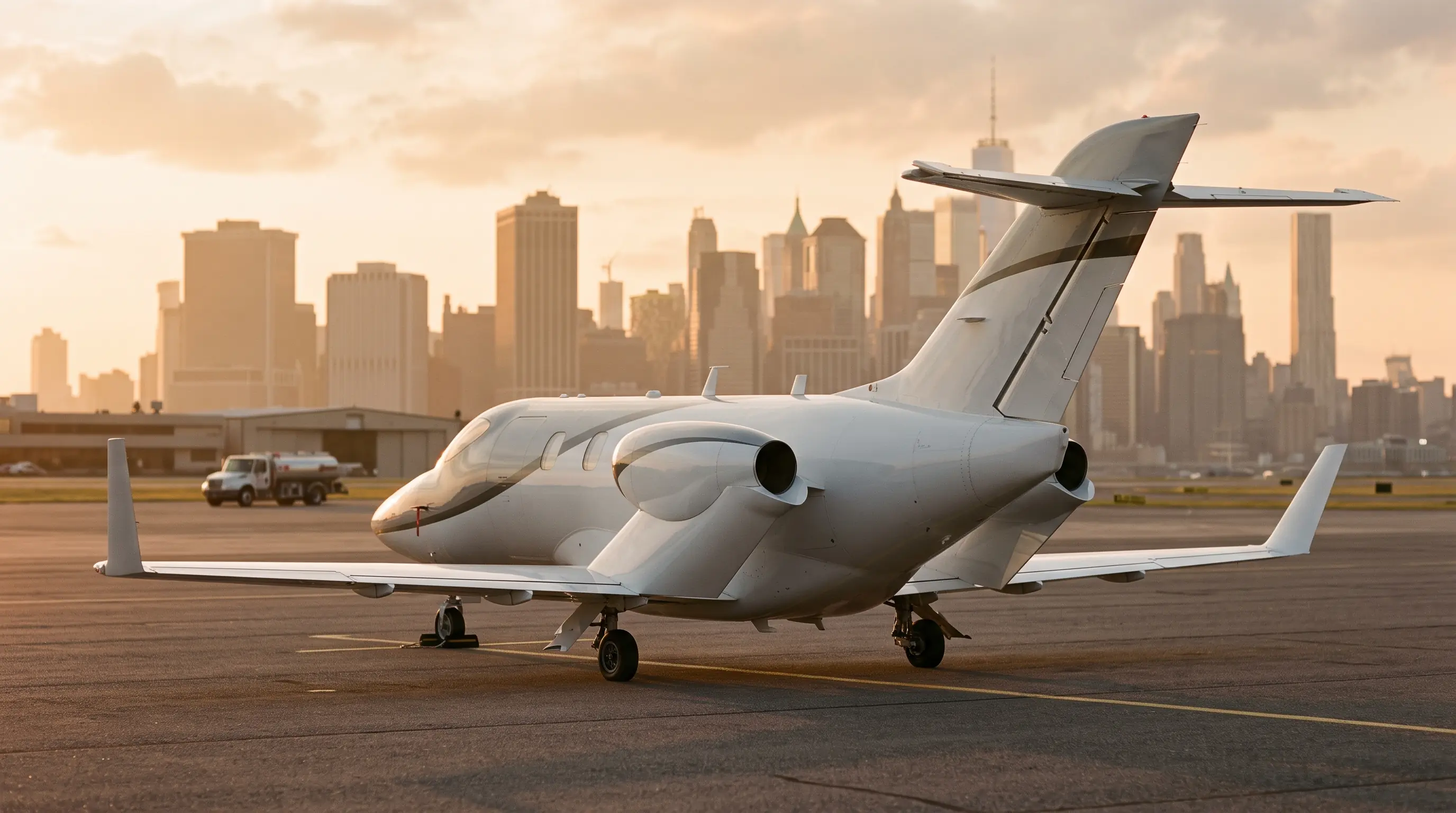 HondaJet Elite II: New York to Miami View details
 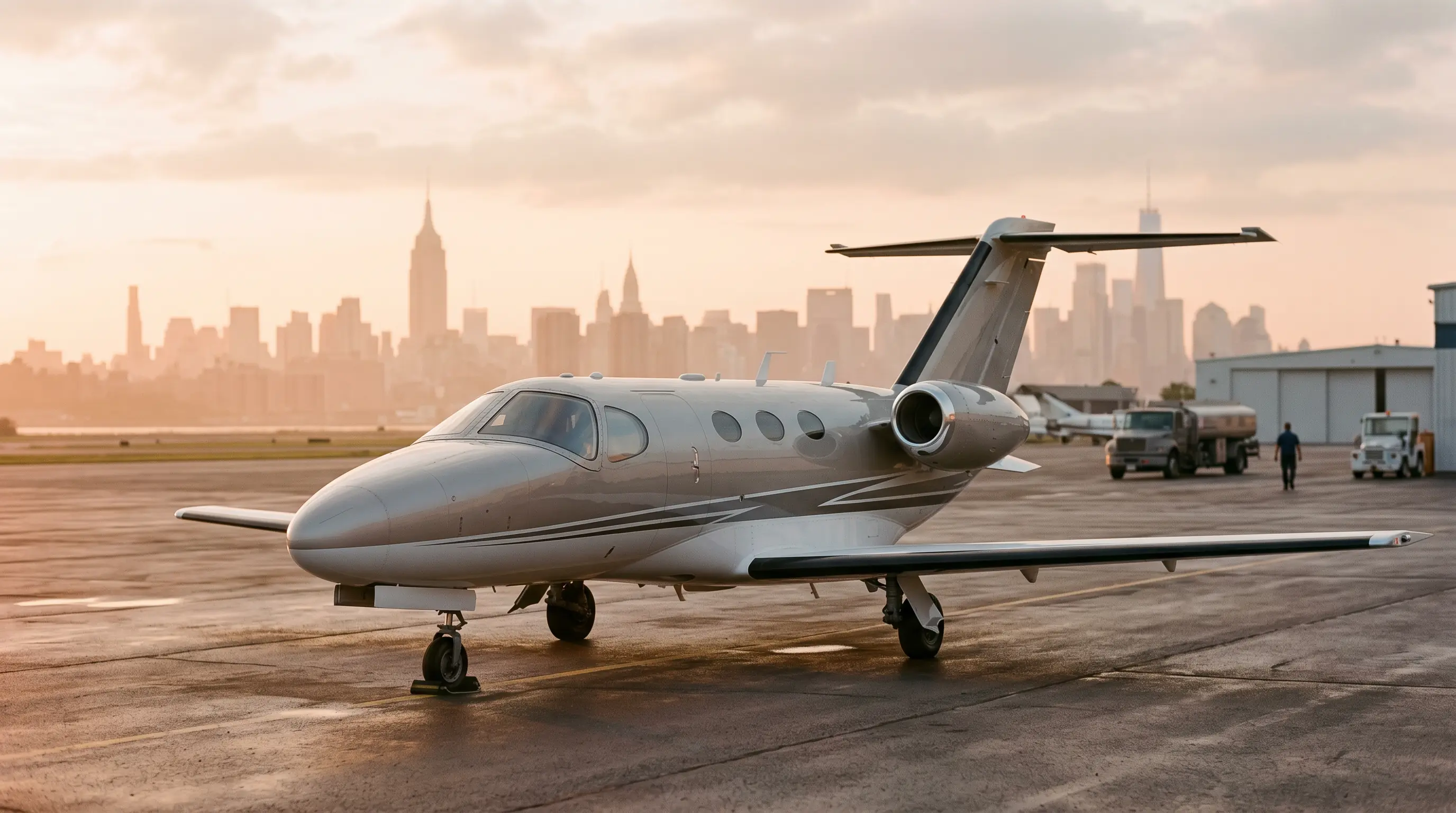 Cessna Citation Mustang: New York to Miami View details
 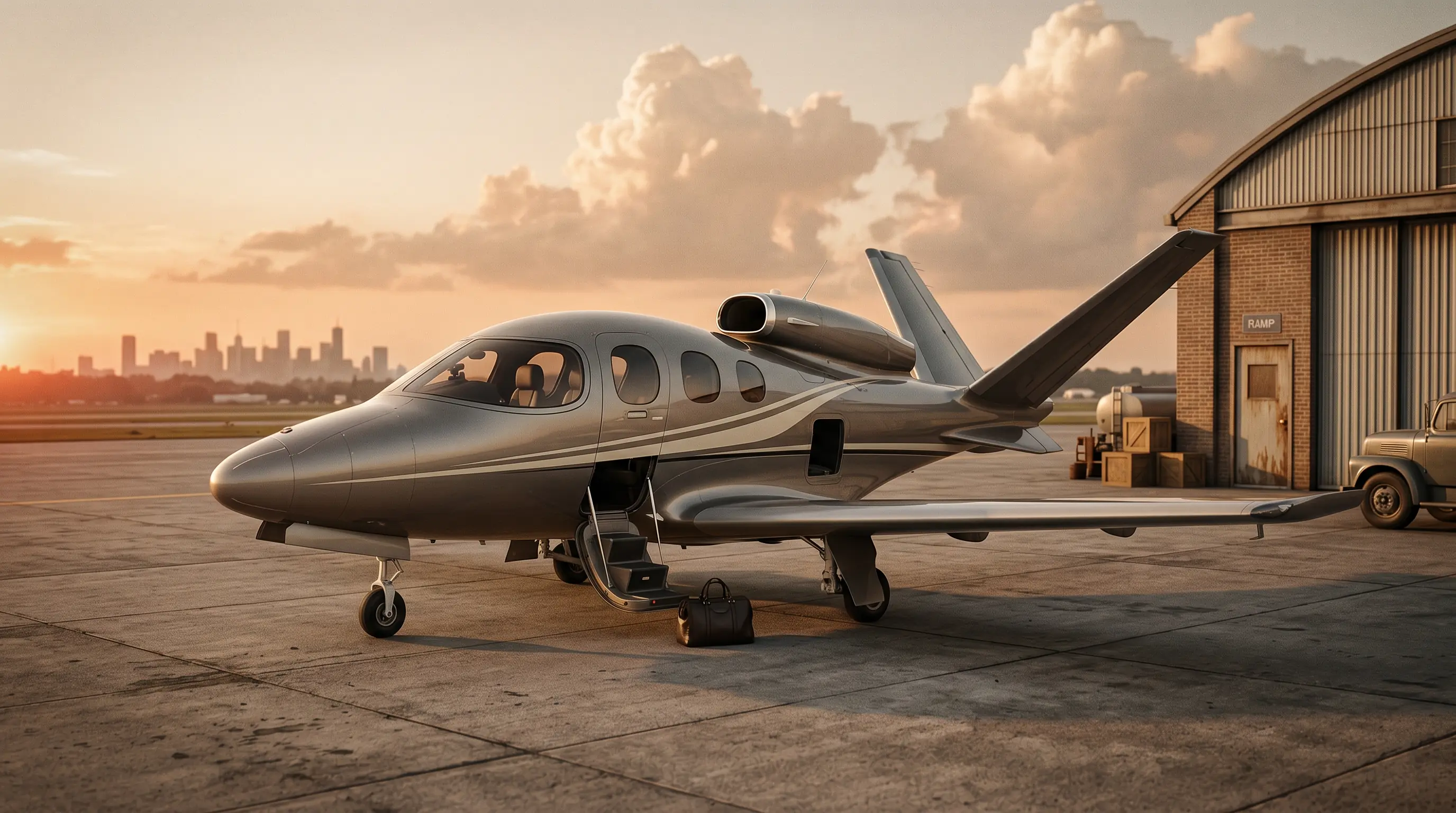 Cirrus Vision Jet G2+: New York to Miami View details
A Comparison at a Glance
| Aircraft | Passengers | Range | Cruise | From (one-way) |
|---|---|---|---|---|
| Phenom 300E | 6–8 | 2,010 nm | 464 ktas | $15,000 |
| Citation CJ3+ | 6–7 | 2,040 nm | 416 ktas | $14,000 |
| Learjet 75 | 8 | 2,040 nm | 465 ktas | $16,000 |
| Citation CJ4 | 7–8 | 2,165 nm | 451 ktas | $14,000 |
| Pilatus PC-24 | 6–8 | 2,000 nm | 440 ktas | $15,000 |
| Citation M2 | 5–6 | 1,550 nm | 404 ktas | $11,000 |
| Phenom 100EV | 4–5 | 1,178 nm | 406 ktas | $11,000 |
| HondaJet Elite II | 5–6 | 1,547 nm | 422 ktas | $12,000 |
| Citation Mustang | 4 | 1,150 nm | 340 ktas | $10,000 |
| Vision Jet G2+ | 4–5 | 1,275 nm | 311 ktas | $9,000 |
The case for the class on this route
The argument is one of proportion. Each aircraft listed here carries a published range well in excess of the route, so it is flown nonstop with a full cabin and instrument reserves intact, even when the winter jet stream sets itself against a southbound leg. Nothing about the distance obliges a fuel stop, and nothing about the cabin obliges a compromise for a party of four to six.
Operating economics complete the case. The light jet asks the lowest hourly cost of any cabin that flies the route nonstop; for the smaller party it is, in the plainest terms, the efficient instrument for the journey.
- Nonstop New York to Miami with a full cabin and IFR reserves
- Cabins proportioned to a flight of under three hours
- The lowest hourly cost among nonstop-capable cabins
- Access to the executive fields the airlines cannot use

The aircraft most often chartered
Three machines account for the greater part of light-jet traffic on this run: the Embraer Phenom 300E, the Cessna Citation CJ3+, and the Bombardier Learjet 75. They diverge in cabin length, luggage volume, cruise speed, and charter cost, and the pages that follow set out each in turn so the comparison may be made on the particulars rather than on reputation.
When the larger cabin is warranted
There is a threshold beyond which the light jet ceases to be the natural choice. A party exceeding six, a quantity of golf or ski equipment for the whole group, or a preference for a flat cabin floor and an enclosed lavatory all point toward the midsize class. Stated party size and luggage allow us to quote both, side by side, without prejudice to either.
Light Jets — A Visual Chronicle
Frequently Asked Questions
- New York to Miami is approximately 950 nautical miles and is flown nonstop in two and three-quarter to three hours, the variance owing chiefly to the prevailing winds. The brief terminal formalities at the executive fields help minimize overall door-to-door travel time.
- Light jets seat between four and eight. On a flight of under three hours they are comfortable for four to six travelers with luggage, which describes the majority of private trips made between the two cities.
- It will. Each light jet documented here carries a range comfortably greater than the 950-nautical-mile journey, so the flight is completed nonstop with a full cabin and reserves in either direction, headwinds notwithstanding.
- A one-way light jet charter from New York to Miami generally falls between $14,000 and $23,000 (estimated), the figure depending on the particular aircraft, the date, and availability. Every quote we issue includes fuel, fees, and taxes in the stated price.
- The answer follows from your priorities: the Phenom 300E for speed and luggage, the Citation CJ3+ for operating economy, and the Learjet 75 for the longest cabin and highest ceiling of the three. We are glad to weigh them against the particulars of a given trip.
Ready to fly New York to Miami?
Send your dates and party size for estimated pricing across suitable aircraft — typically within two hours, with no obligation.
 +1 (332) 290-1479
