Beechcraft King Air 350i: New York to Miami
Published · Updated
The King Air 350i from Beechcraft (Textron Aviation) is the definitive large turboprop, an aircraft so long-serving and so widely flown that it has become the standard against which the class is measured. On the flight south it offers a genuinely comfortable eight-seat cabin and the range to fly the route nonstop, at an operating cost well below that of a comparable jet.
From Teterboro Airport (TEB) to Miami-Opa Locka Executive Airport (OPF) it is one of the most accomplished turboprops on this route, and a thoroughly economical one.
- 1,806 nm range
- 312 ktas cruise
- 8 passengers
Estimated pricing for planning — your account manager confirms the final quote.
Private charters between New York and Miami typically depart from Teterboro Airport (TEB), Westchester County Airport (HPN), Republic Airport (FRG), or Long Island MacArthur Airport (ISP) and arrive at Miami-Opa Locka Executive Airport (OPF), Fort Lauderdale Executive Airport (FXE), President Donald J. Trump International Airport (DJT), or Miami International Airport (MIA).
King Air 350 Specifications
Manufacturer performance figures — Beechcraft (Textron Aviation).
- 1,806 nm
- Max range
- 312 ktas
- Cruise speed
- 8
- Passengers
- 4 ft 9 in
- Cabin height
- 71 cu ft
- Luggage
- 35,000 ft
- Service ceiling
The King Air 350i between New York and Miami
With 1,806 nautical miles of range against the route's 950, the King Air 350i flies New York to Miami nonstop with a full cabin and ample reserves — the distance comfortably within its means. Its 312-knot cruise puts flight time at around three and a half hours, slower than a jet but at a markedly lower hourly cost, and a 35,000-foot ceiling lifts it above a good deal of weather.
The aircraft's twin-turboprop reliability and runway flexibility are the foundation of its long-standing popularity, and broaden the choice of airports at either end of the route.
- Range of 1,806 nm — comfortably nonstop on this city pair
- A genuinely comfortable eight-seat double-club cabin
- Far lower hourly cost than any jet on the route
- Twin-turboprop reliability and runway flexibility

The cabin and its appointments
The cabin seats eight against a maximum of eleven, in a double-club configuration with a flat floor and a stand-up center aisle uncommon in a turboprop. At nineteen feet six inches it is among the most spacious cabins in the class, with seventy-one cubic feet of luggage — a thoroughly practical and comfortable space for a flight of three and a half hours.
How it compares within the class
The King Air 350i sits at the top of the turboprop class, a step above its sibling the King Air 260 in cabin and range, and an alternative to the single-engine Pilatus PC-12 for the traveler who prefers two engines. For the cost-conscious business party on this journey, it is among the most rational choices in business aviation.
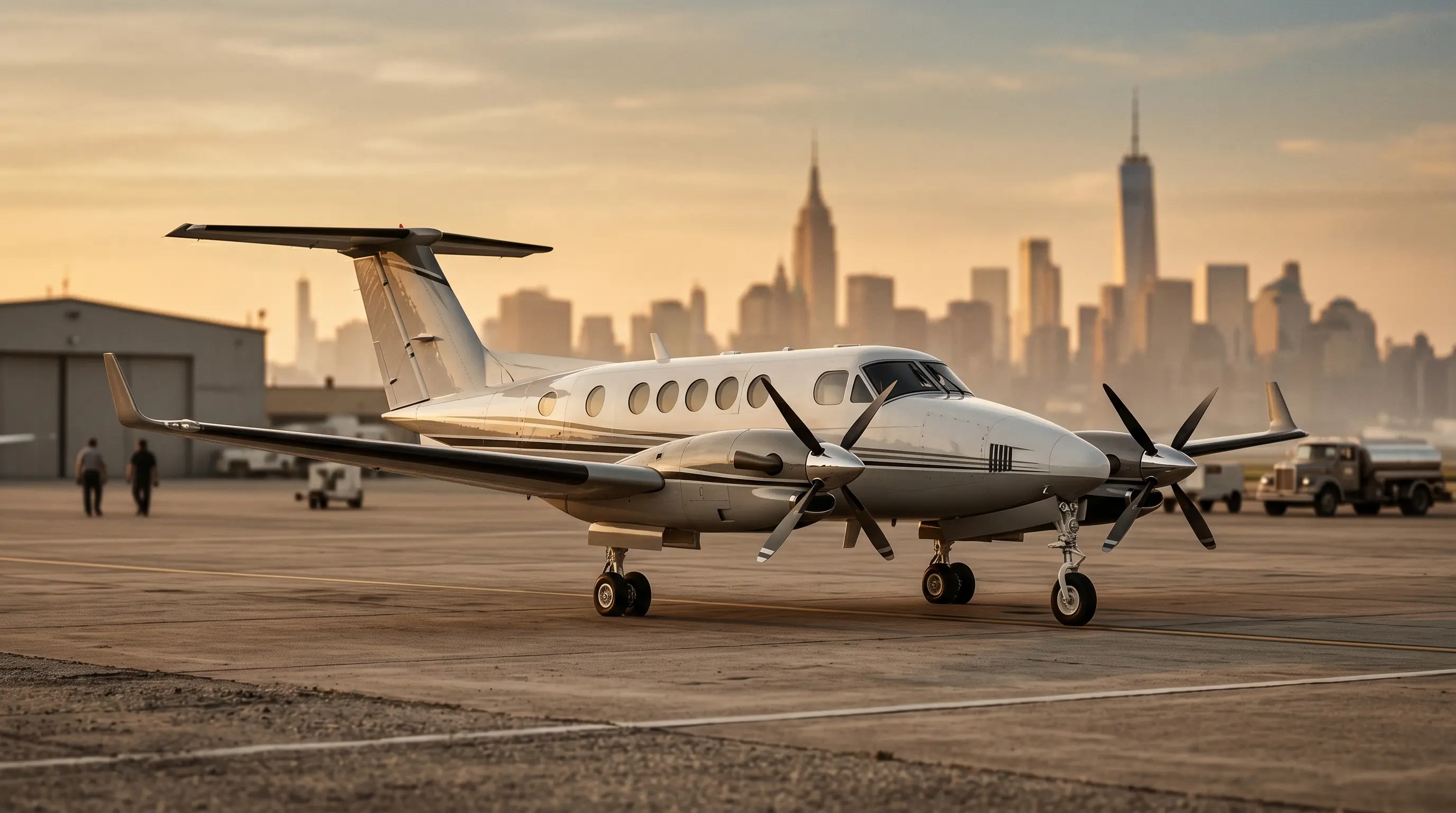
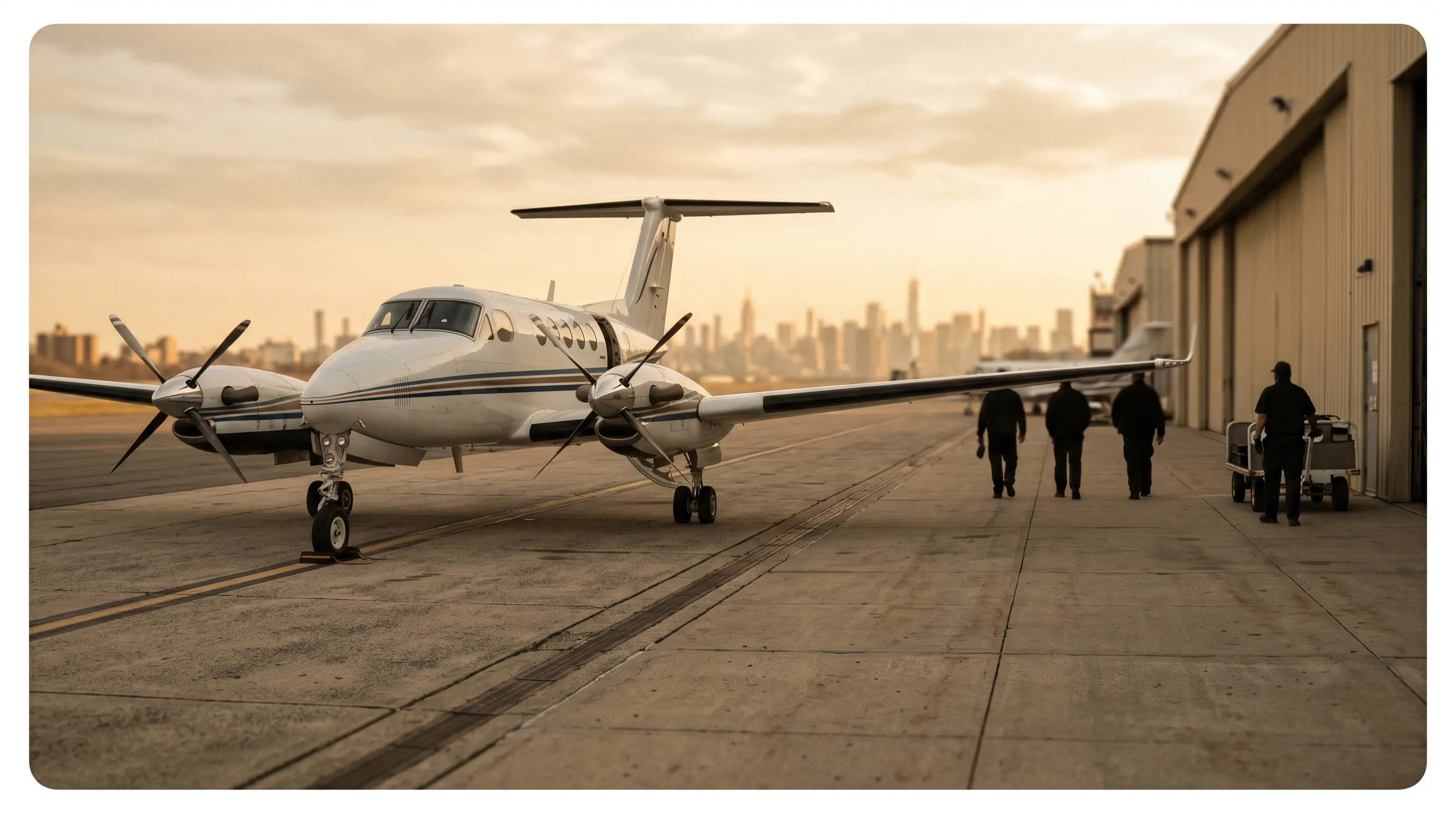
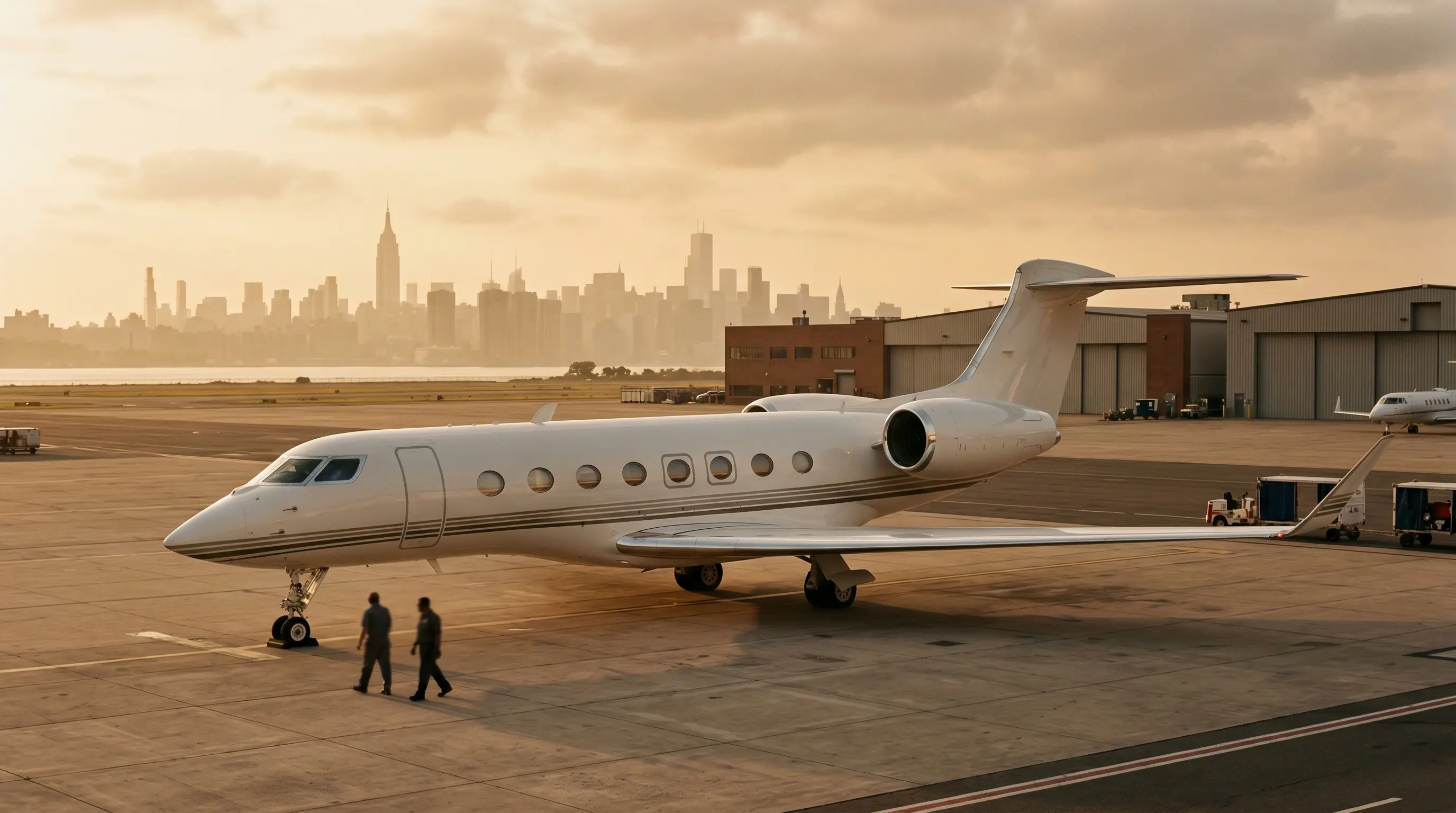
The King Air 350, inside and out
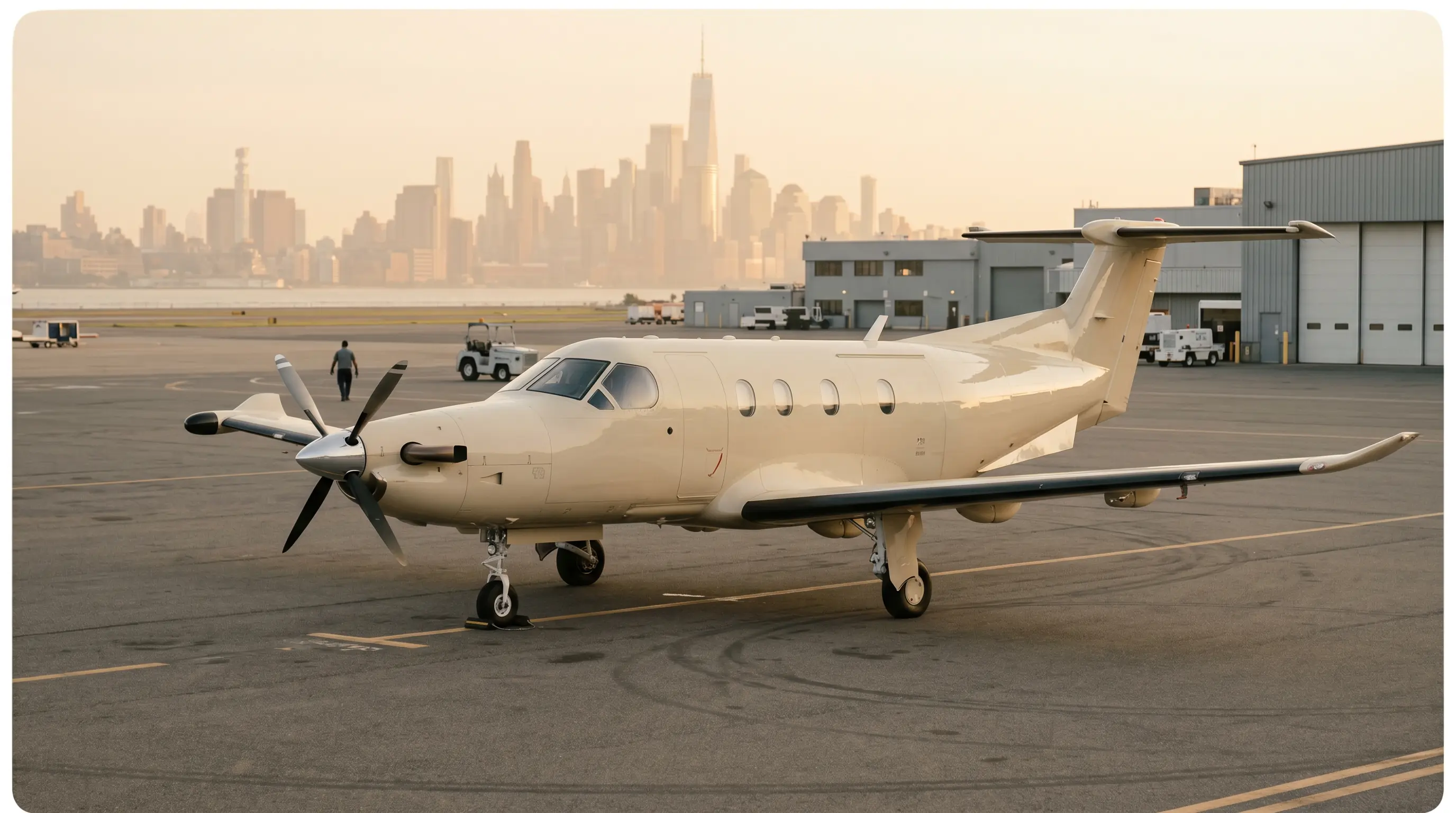
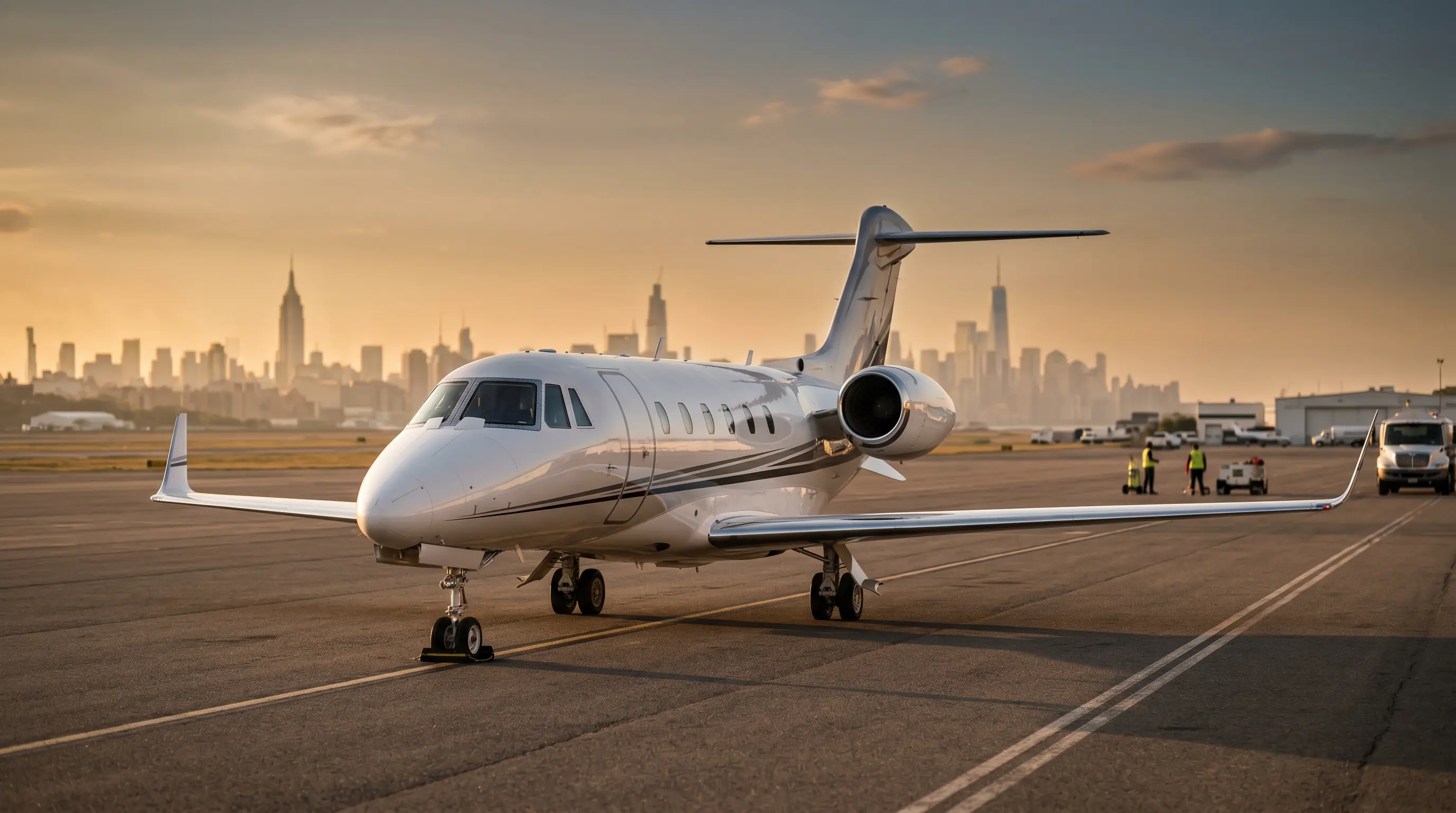
Other Turboprops for the TEB–OPF Route
Charter services for the New York–Miami route
Frequently Asked Questions
- It does, comfortably. Its 1,806-nautical-mile range against the roughly 950 nautical miles of the New York–Miami run allows the route to be flown nonstop with a full cabin and ample reserves, in either direction.
- Chiefly for cost. The King Air 350i offers a comfortable eight-seat cabin at an hourly rate well below that of a comparable jet. The trade-off is speed — a jet completes the trip more quickly — which is why we are glad to quote both.
- Eight in a comfortable double-club configuration, against a maximum of eleven. Its spacious cabin and flat floor make it among the most accommodating turboprops for this leg.
- Around three and a half hours nonstop from New York to Miami at its 312-knot cruise — slower than a jet, but at a considerably lower hourly cost.
- A one-way King Air 350i charter from New York to Miami runs roughly $9,000 to $13,000 (estimated), depending on the date and availability. Every quote includes fuel, fees, and taxes in the stated price.
Ready to fly New York to Miami?
Send your dates and party size for estimated pricing across suitable aircraft — typically within two hours, with no obligation.
 +1 (332) 290-1479
