Dassault Falcon 7X: New York to Miami
Published · Updated
The Dassault Aviation Falcon 7X was the aircraft that established the modern Falcon flagship line, the first business jet with fly-by-wire controls, and it remains one of the most refined long-range jets in service. Between New York and Miami it flies nonstop using only a small portion of its available range, in a wide cabin renowned for its quiet and its smooth, precise handling.
From Teterboro Airport (TEB) to Miami-Opa Locka Executive Airport (OPF) it completes the route in around two hours, a long-range heavy jet of pioneering design.
- 5,950 nm range
- 488 ktas cruise
- 12–14 passengers
Estimated pricing for planning — your account manager confirms the final quote.
Private charters between New York and Miami typically depart from Teterboro Airport (TEB), Westchester County Airport (HPN), Republic Airport (FRG), or Long Island MacArthur Airport (ISP) and arrive at Miami-Opa Locka Executive Airport (OPF), Fort Lauderdale Executive Airport (FXE), President Donald J. Trump International Airport (DJT), or Miami International Airport (MIA).
Falcon 7X Specifications
Manufacturer performance figures — Dassault Aviation.
- 5,950 nm
- Max range
- 488 ktas
- Cruise speed
- 12–14
- Passengers
- 6 ft 2 in
- Cabin height
- 140 cu ft
- Luggage
- 51,000 ft
- Service ceiling
The Falcon 7X on this route
With 5,950 nautical miles of range against the route's 950, the Falcon 7X flies New York to Miami nonstop with ample reserves, offering significantly more capability than this trip requires. Its Mach 0.90 cruise typically puts the flight at around two hours, and a 51,000-foot ceiling lets it climb above much of the weather and the seaboard traffic.
The 7X was the first business jet to fly with fly-by-wire controls, lending it a smoothness and precision of handling that travelers remark upon, and its three-engine design contributes to the Falcon family's excellent runway flexibility and long-range capability.
- The first business jet with fly-by-wire controls
- Three-engine design with excellent airport flexibility
- Range of 5,950 nm — comfortably nonstop with substantial intercontinental capability
- A wide cabin renowned for quiet and smooth handling

The cabin and its appointments
The cabin seats twelve to fourteen against a maximum of sixteen, in a wide configuration seven feet eight inches across that divides into distinct living zones, with a full galley and one hundred and forty cubic feet of luggage. Its quiet and its refined finish, combined with the smoothness of the fly-by-wire ride, make it among the most pleasant cabins in the heavy class.
How it compares within the class
The Falcon 7X is the aircraft from which the larger Falcon 8X was developed, offering a similar wide cabin and capability at a lower charter cost, and stands out for refinement and range where the Falcon 2000LXS offers a more compact twin. For the group drawn to a smooth, refined trijet, it stands among the most accomplished aircraft in the heavy-jet class.
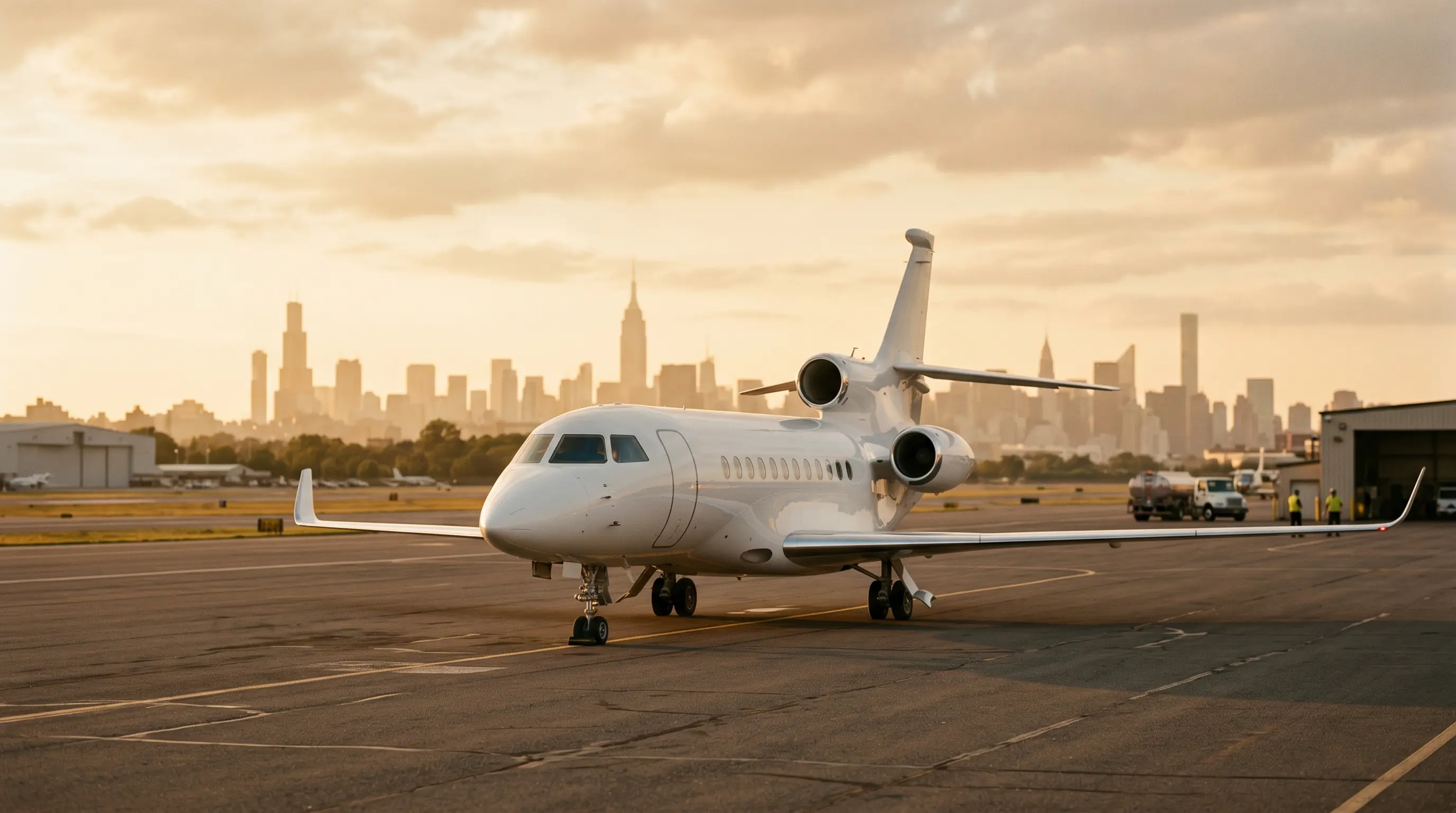
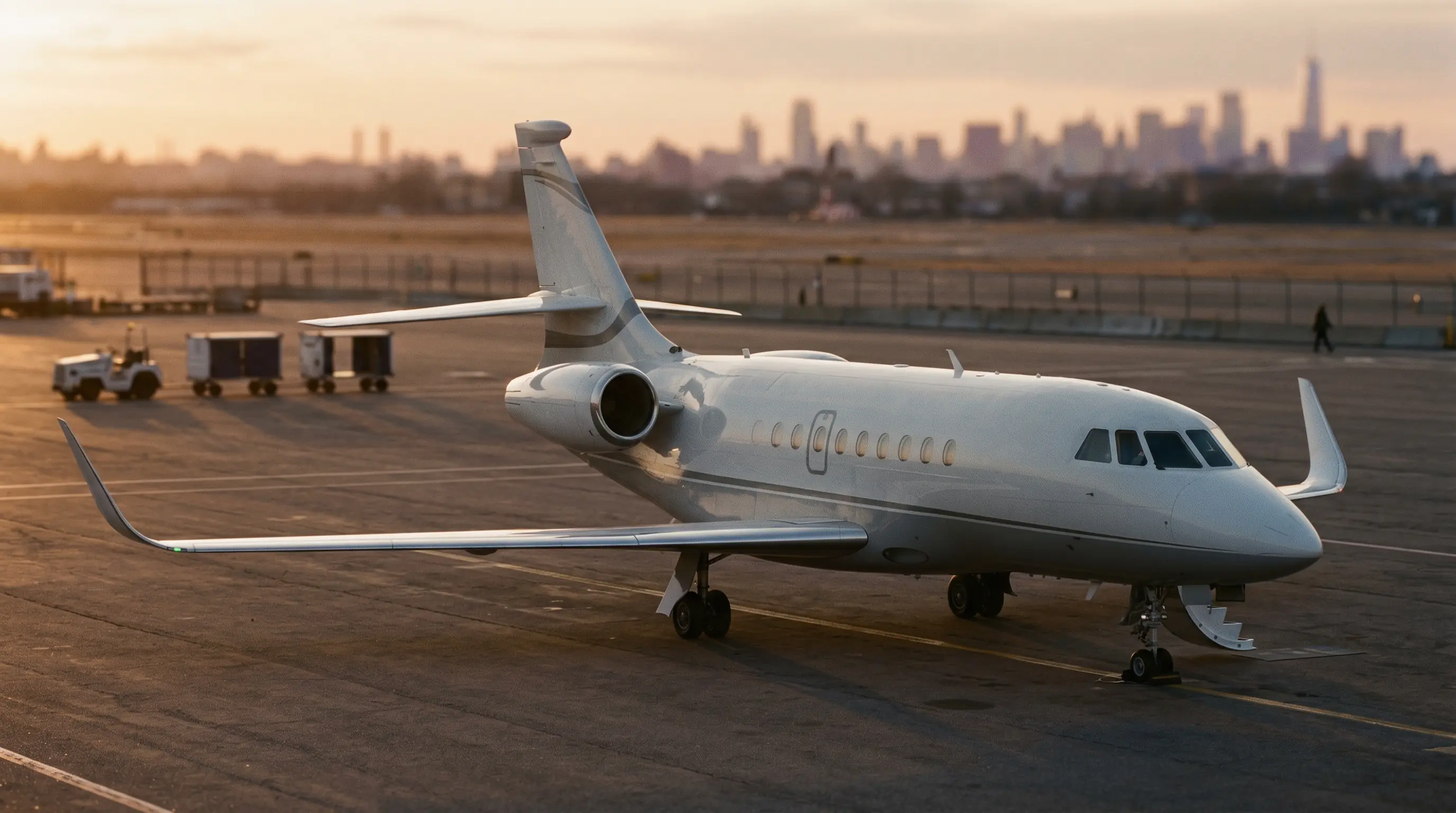
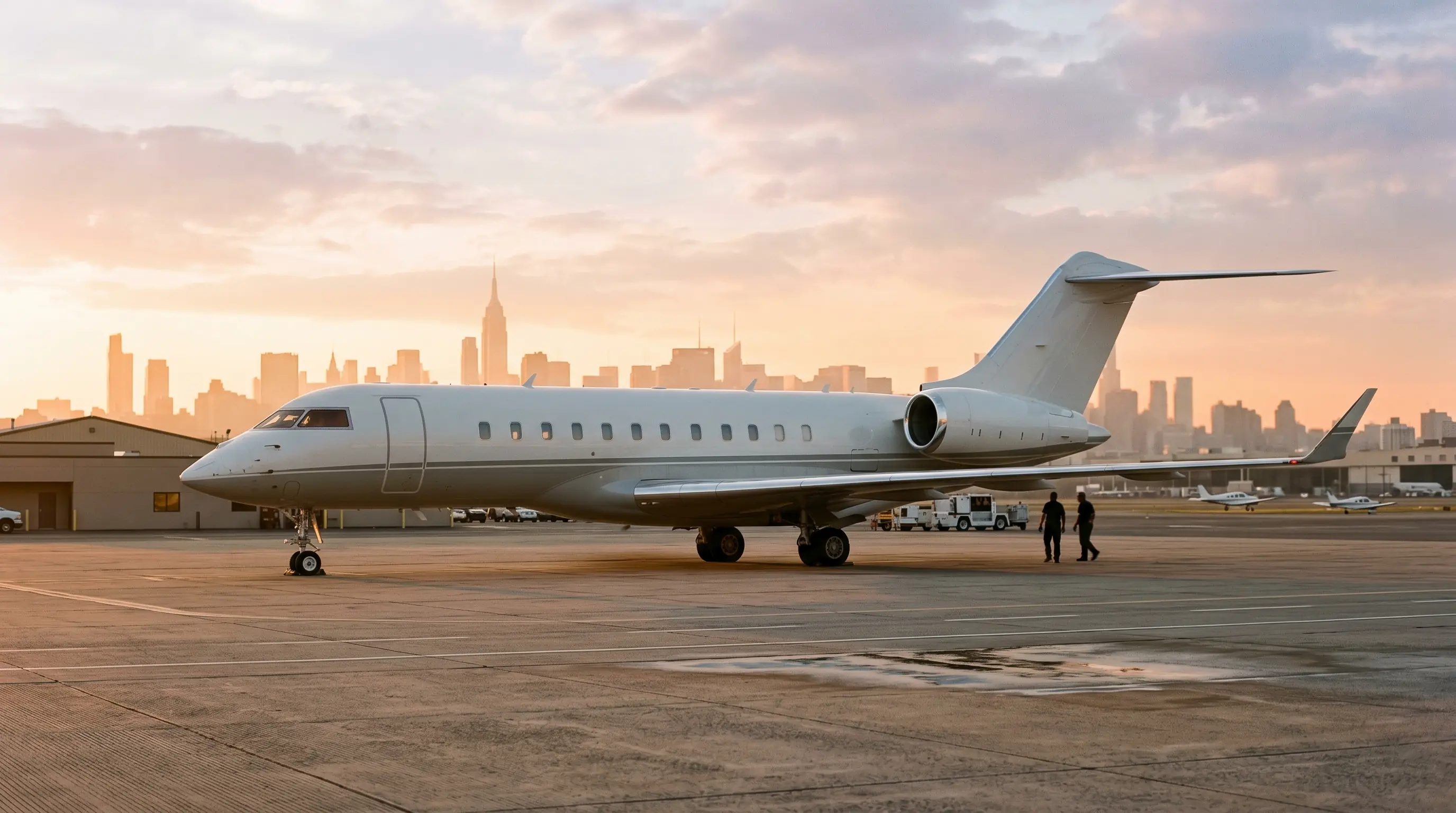
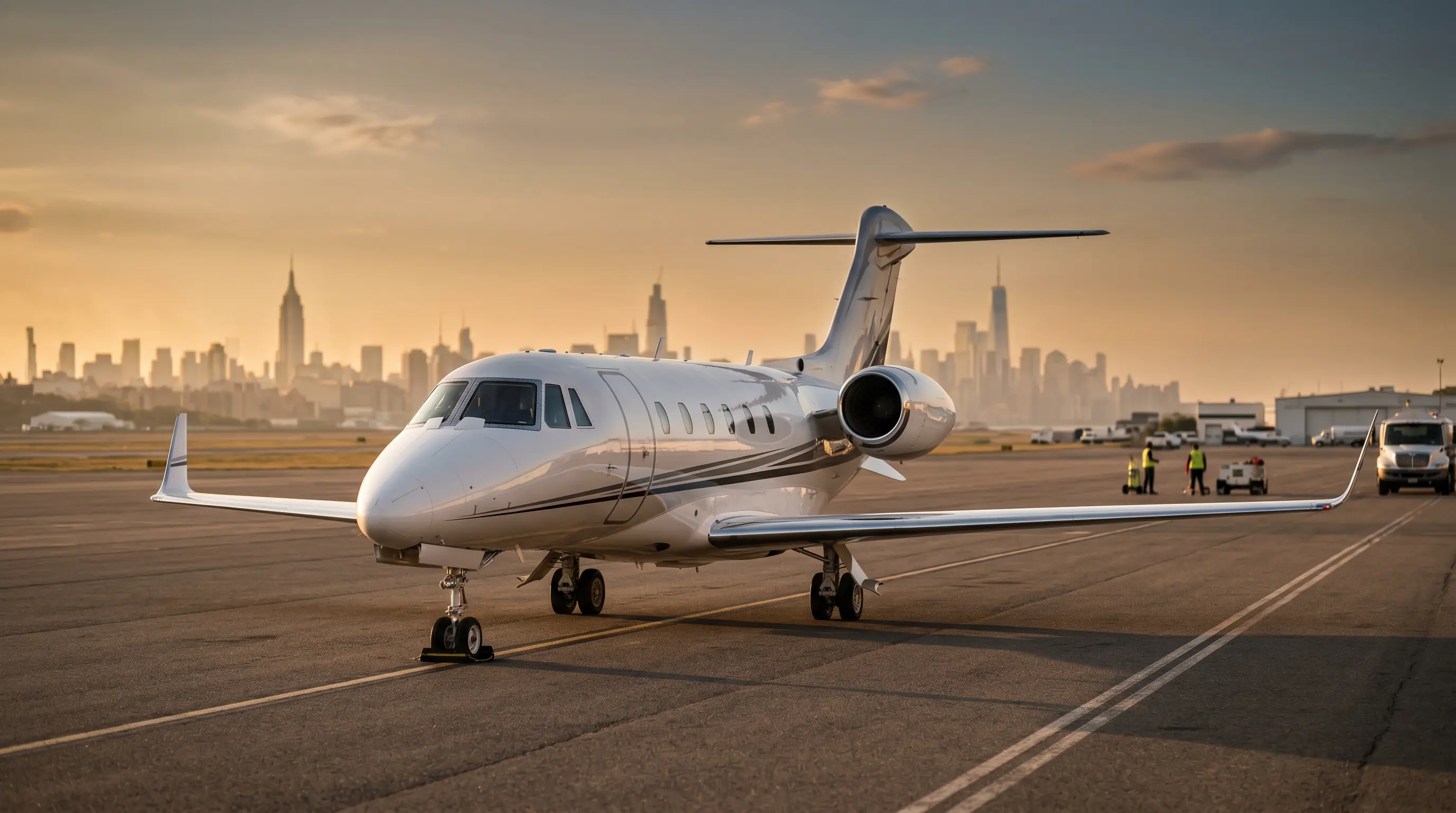
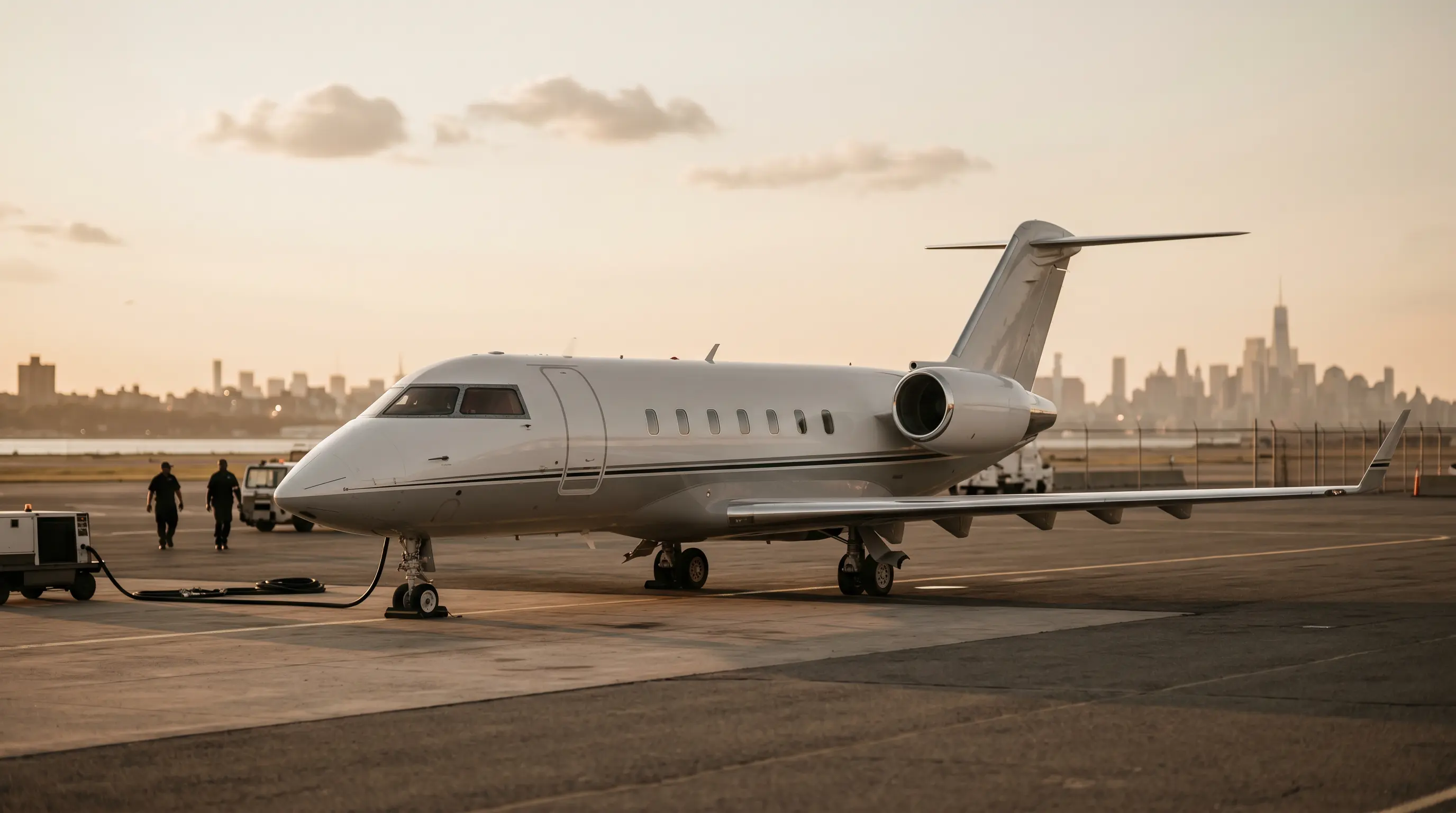
The Falcon 7X, inside and out
Other Heavy Jets for the TEB–OPF Route
Charter services for the New York–Miami route
Frequently Asked Questions
- It does, with ample reserves. Its 5,950-nautical-mile range against the 950 miles of this run allows the route to be flown nonstop with a full cabin, and it offers substantial intercontinental capability beyond this mission.
- It was the first business jet to fly with fly-by-wire controls, which lend it a smoothness and precision of handling travelers remark upon. That advanced flight-control technology, together with its long-range capability, made it the foundation of the modern Falcon flagship line.
- Twelve to fourteen in its usual configuration, against a maximum of sixteen. Its wide cabin divides into distinct living zones, well suited to the larger group traveling together.
- Around two hours nonstop on the New York–Miami leg at its Mach 0.90 cruise, flown at 51,000 feet, with the executive airports helping minimize overall travel time.
- A one-way Falcon 7X charter from New York to Miami runs roughly $44,000 to $66,000 (estimated), depending on the date and availability. Every quote includes fuel, fees, and taxes in the stated price.
Ready to fly New York to Miami?
Send your dates and party size for estimated pricing across suitable aircraft — typically within two hours, with no obligation.
 +1 (332) 290-1479
